Physical Address
304 North Cardinal St.
Dorchester Center, MA 02124
Physical Address
304 North Cardinal St.
Dorchester Center, MA 02124

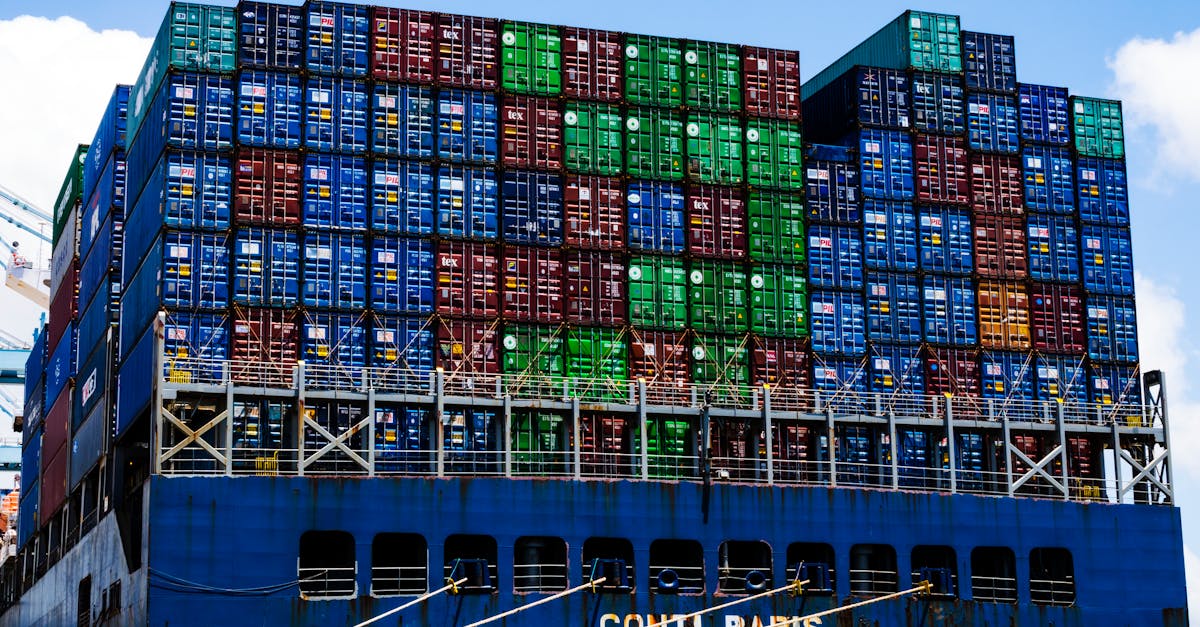
Los Angeles, November 22, 2025 – A major fire aboard a cargo ship at the Port of Los Angeles has triggered a full-scale emergency response at North America’s busiest port, disrupting vessel traffic, raising fresh questions about maritime safety, and putting global supply chains on edge once again. The fire on a cargo ship at the Port of Los Angeles was first reported shortly before dawn, with thick black smoke visible for miles along the Southern California coastline, according to port officials and eyewitnesses.
“This is the most serious vessel fire we’ve seen here in years,” one senior port official told local media, describing a scene of “intense heat, rapidly changing conditions, and a very complex hazardous materials environment.” With the Port of Los Angeles handling roughly 20% of all incoming containerized cargo to the United States, even a single day of disruption can translate into millions of dollars in delayed goods – from consumer electronics and apparel to auto parts and industrial components.
As of Sunday morning, firefighting crews, the U.S. Coast Guard, and multiple hazmat teams remained on scene. Authorities emphasized that the situation was “dynamic but increasingly contained,” even as global markets and shipping lines watched closely for signs of prolonged port disruption.
According to preliminary statements from the Port of Los Angeles, the fire broke out in the cargo hold of a large container ship berthed at one of the port’s primary container terminals early on November 22, 2025. The vessel, flying a foreign flag and operated by a major global shipping line, had recently arrived from Asia with thousands of containers on board.
Port officials said an initial alarm was raised by the ship’s crew after smoke was detected in one of the below-deck holds containing mixed cargo, including consumer goods, machinery, and several containers listed as carrying hazardous materials such as lithium-ion batteries, industrial chemicals, and aerosol products.
Within minutes, terminal operations were halted at the affected berth. Los Angeles Fire Department (LAFD) units, port fire boats, and specialized marine firefighting teams were deployed. The U.S. Coast Guard quickly established a safety zone around the vessel, restricting nearby ship movements and closing off portions of the channel to non-essential traffic.
Eyewitness cellphone footage shared on social platforms showed columns of dark smoke rising from the ship’s midsection, with fire boats directing powerful water streams at the vessel’s port side. At least one container on deck appeared to be heavily scorched in early images, though officials stressed that most of the visible flames were coming from below decks.
“The challenge with a shipboard fire like this is that you’re fighting an incident inside a steel box, stacked within other steel boxes, inside a floating steel hull,” explained a retired port fire chief interviewed by local TV. “Access is limited, visibility is poor, and you may be dealing with unknown chemical interactions.”
Crews initially focused on cooling the outer hull and the stacked containers on deck to prevent heat from spreading vertically and laterally. Simultaneously, specialized teams equipped with breathing apparatus and thermal imaging cameras descended into internal compartments to locate the source of the blaze and assess whether it had spread along cable runs or into adjacent holds.
By mid-morning, the LAFD reported that the fire was “partially contained, but not fully under control,” noting that pockets of intense heat persisted in confined spaces. Several crew members were evaluated for smoke inhalation; early reports indicated no life-threatening injuries, though that figure could change as authorities complete their assessments.
As a precautionary measure, operations at neighboring berths were curtailed, with some truck and rail movements temporarily rerouted. The port’s main container terminals remained open but under modified procedures, slowing throughput and raising immediate concerns among shipping and logistics operators.
The significance of a cargo ship fire at the Port of Los Angeles extends far beyond a single maritime incident. The port is a critical gateway for trans-Pacific trade, serving as a primary entry point for goods from China, South Korea, Japan, and other Asian economies. Disruption here can ripple across national supply chains in days, not weeks.
In the wake of the COVID-era supply chain crises and subsequent shipping bottlenecks, major retailers, manufacturers, and logistics providers have built extensive contingency plans around the stability of ports like Los Angeles and Long Beach. A high-profile vessel fire – particularly one involving hazardous cargo – touches on several major fault lines simultaneously: port capacity, safety regulation, climate resilience, and the fragility of just-in-time logistics.
First, there is the operational risk. Even if the fire is contained to a single ship, emergency protocols can reduce berth availability, slow crane operations, and trigger temporary shutdowns of nearby terminals. In a port that regularly handles tens of thousands of containers per day, a slowdown of just 10–15% can create backlogs that take weeks to clear, especially during peak shipping periods ahead of the holiday season.
Second, there is regulatory and insurance risk. Vessel fires often lead to intense scrutiny of cargo declarations, stowage plans, and hazardous materials handling. If investigators find evidence of misdeclared cargo or non-compliance with International Maritime Organization (IMO) rules, it can trigger tighter regulations, higher insurance premiums, and new compliance costs for ocean carriers and shippers alike.
Third, the event intersects with growing concerns over lithium-ion battery and chemical cargo safety. From electric vehicles and scooters to smartphones and energy storage systems, lithium-based products are increasingly common in global trade. Several recent high-profile shipboard fires globally have been linked to battery-related incidents, magnifying industry anxieties about stowage and fire suppression technology.
Lastly, on a broader level, a dramatic incident at North America’s busiest port feeds into the public narrative about the vulnerability of sprawling, hyper-efficient supply chains to single points of failure. Consumers, still sensitive to the memory of empty shelves and delayed deliveries, are quick to associate port incidents with future shortages and price increases, regardless of whether those fears fully materialize.
As smoke rose over the harbor, social media lit up. Within an hour of the first local news alerts, “Port of LA,” “cargo ship fire,” and “Los Angeles port fire” were trending on X (formerly Twitter) and heavily discussed in logistics and shipping threads on Reddit.
On X, one user claiming to be a truck driver posted a short video from a nearby overpass, writing:
“Been hauling containers in and out of this place for 15 years. Never seen a column of smoke like that. If this closes a terminal, expect backups FAST. #PortOfLA #SupplyChain”
Another widely shared post came from a consumer perspective:
“First COVID, then the canal blockages, now a cargo ship fire at the Port of Los Angeles. Does anything in the global supply chain actually work anymore?”
On Reddit, a thread in r/Shipping titled “Huge fire on container ship at Port of LA – anyone got details?” gathered thousands of upvotes and comments within hours. Self-identified mariners and port workers weighed in with technical speculation about what might have caused the blaze, with several pointing to the likelihood of hazardous cargo.
One commenter, claiming to be a former marine engineer, wrote:
“If they’ve got lithium batteries or mixed chemicals down in a lower hold, it’s a nightmare. You can’t just flood with water without considering what you’re reacting with. Ventilation, detection, and proper manifesting are everything – and sometimes those manifests aren’t accurate.”
Conspiracy theories also surfaced quickly, with a minor but vocal subset of users suggesting the possibility of sabotage or cyberattack-related causes. However, authorities have given no indication that foul play is suspected at this stage, describing the incident as a maritime fire under standard investigation protocols.
Local residents in San Pedro and nearby coastal neighborhoods used community forums to share air quality readings and discuss whether to keep windows closed. Some posted images of ash-like particles on car windshields, though air quality agencies later said that, while smoke was visible, particulate levels in surrounding communities remained within “moderate” ranges for most of the morning.
From a cultural standpoint, the fire instantly became another visual symbol of a global trading system under stress: massive vessels, towering stacks of containers, plumes of smoke, and emergency responders dwarfed by the scale of modern shipping infrastructure.
Maritime safety experts argue that the fire at the Port of Los Angeles underscores longstanding concerns about the risks posed by hazardous materials in containerized shipping.
“We’ve known for years that misdeclared or poorly stowed dangerous goods are a ticking time bomb,” said Dr. Elena Morais, a maritime risk specialist at the non-profit Global Transport Safety Institute, in a phone interview. “Chemical cargoes, lithium batteries, and certain industrial goods can all become extremely volatile under heat or when exposed to water. Even with international regulations in place, there’s a compliance and enforcement gap.”
International guidelines, including the IMO’s International Maritime Dangerous Goods (IMDG) Code, require detailed declarations, specific packaging, and careful segregation of incompatible substances. Yet shipping lines and regulators routinely report incidents where dangerous goods are misdeclared – sometimes accidentally, sometimes to save on higher hazmat freight charges.
“It only takes one incorrectly labeled container, stacked in the wrong place, to turn a manageable onboard incident into a multi-million-dollar disaster,” Morais noted.
Urban and infrastructure analysts see the incident as another reminder of the vulnerability of mega-ports that have been operating near capacity for years.
“The Port of Los Angeles is both an economic engine and a single point of failure,” said Michael Navarro, a logistics professor at California State University, Long Beach. “We’ve pushed efficiency, volume, and just-in-time logistics to such an extreme that any disruption – a labor dispute, a storm, a cyber incident, or a shipboard fire like this – has oversized consequences.”
Navarro argues that port authorities and policymakers will now face renewed pressure to demonstrate resilience: redundancy in berths, better emergency routing, and deeper integration with inland logistics hubs that can absorb shocks.
“If investigators find systemic gaps – whether in fire detection on vessels, coordination between ship crews and port emergency teams, or the handling of hazardous containers on the terminal – expect regulatory ripples that go beyond Los Angeles,” he said.
The financial implications of a serious cargo ship fire can be staggering. Marine insurers immediately begin calculating potential losses, which may include damage to the vessel itself, destroyed cargo, salvage costs, business interruption at the terminal, and environmental cleanup if hazardous materials escape containment.
“Depending on the severity of the fire and the value of cargo affected, this could easily become a nine-figure incident,” estimated one senior executive at a European marine insurance syndicate, who spoke on condition of anonymity because their firm was not yet authorized to discuss specific exposures.
In a typical scenario, vessel owners may declare General Average, a maritime legal principle under which all parties with a financial stake in a sea voyage (including cargo owners) proportionally share the costs of saving the ship and its cargo. That can trigger lengthy legal and claims processes, adding yet another layer of complexity for importers already under pressure to maintain inventory levels.
Equity markets and commodity traders were also watching the situation carefully. While a single-ship fire is unlikely by itself to move global indices, investors are highly sensitive to signs of systemic port disruption or cascading delays in specific sectors like autos, consumer electronics, or apparel.
“Our clients remember 2021 and 2022 very clearly,” said Priya Deshpande, a West Coast logistics and retail analyst at a major investment bank. “When they see words like ‘Port of Los Angeles’ and ‘major fire’ in the same headline, they immediately ask: How bad is it? How long will it last? And what exposure do my portfolio companies have?”
Environmental groups were quick to frame the incident within broader climate and pollution debates around mega-ports and fossil-fuel-heavy shipping networks.
“You’ve got one of the world’s busiest ports, a hub of diesel emissions and industrial activity, now dealing with a hazardous vessel fire,” said a spokesperson for a California-based environmental NGO focused on port pollution. “Even if this specific incident doesn’t produce a major toxic release, it’s a stark reminder of the environmental risk that comes with concentrating so much hazardous cargo in one place.”
Container ship fires are also becoming more frequent, or at least more visible, in part because of rising cargo complexity and volume. Industry data over the past decade points to a concerning rise in serious onboard incidents involving hazardous or misdeclared cargoes.
“Scale is the story,” said Morais. “Ships are bigger, loads are denser, and the mix of goods includes more energy-dense materials like batteries. Fire detection and suppression technology has improved, but the underlying risk landscape is changing faster.”
In the immediate term, the priority remains fully extinguishing the fire, preventing reignition, and ensuring the safety of crew members, firefighters, and port workers. That process can take many hours or even days for deep-seated shipboard fires, especially when hazardous materials are involved.
Once the fire is out and the vessel is stabilized, attention will shift to investigation and accountability. The U.S. Coast Guard, National Transportation Safety Board (NTSB), and possibly international maritime authorities will likely open formal inquiries. They will examine cargo manifests, ship maintenance records, crew training logs, and terminal procedures to piece together what happened and why.
Key questions investigators are likely to focus on include:
On the operational side, terminal operators will work to restore normal throughput as quickly as safety permits. That could involve temporarily relocating other vessels to alternative berths, adjusting crane schedules, and rerouting some cargo to the neighboring Port of Long Beach or to alternative West Coast ports such as Oakland, Seattle, or Vancouver.
Shippers and importers will be assessing exposure to both direct cargo losses and indirect delays. Retailers dependent on just-in-time inventory may bring forward contingency plans, from air freighting critical items to rerouting future sailings to alternate gateways if disruptions persist.
In policy terms, this incident will almost certainly feed into ongoing debates about port resilience, hazardous cargo regulation, and investments in offshore inspection, digital tracking, and automated detection systems. Regional policymakers, already under pressure to modernize port infrastructure and reduce emissions, may now face calls to prioritize fire and hazard mitigation upgrades as part of any new funding packages.
If the cause of the fire is linked to misdeclared cargo or non-compliance, industry groups may push for stricter penalties and better data integration between shipper systems, carriers, and regulators – potentially opening the door to new digital platforms that verify and cross-check container contents using AI-driven risk scoring.
The fire on a cargo ship at the Port of Los Angeles on November 22, 2025, is more than a dramatic local emergency; it is a live stress test of how the world’s busiest ports handle high-risk incidents in an era of fragile supply chains and escalating complexity.
In physical terms, the blaze is a battle against heat, smoke, and confined steel spaces. In economic terms, it is a race to contain disruptions that can echo across factories, warehouses, and retail shelves thousands of miles away. In political and regulatory terms, it is yet another data point pressing regulators, shipping lines, and ports to tighten oversight of hazardous cargo and invest in more resilient infrastructure.
As firefighters work to fully extinguish remaining hotspots, the real work is just beginning: tracing the root causes, quantifying the damage, and extracting lessons before the next incident. North America’s busiest port, already central to debates over trade, climate, and industrial policy, now faces a new challenge – proving that it can manage high-stakes emergencies without becoming a chronic choke point in the global economy.
For now, the smoke over Los Angeles is a stark reminder: in a world where everything is connected by ships and containers, what happens in one cargo hold can matter far beyond the harbor.