Physical Address
304 North Cardinal St.
Dorchester Center, MA 02124
Physical Address
304 North Cardinal St.
Dorchester Center, MA 02124

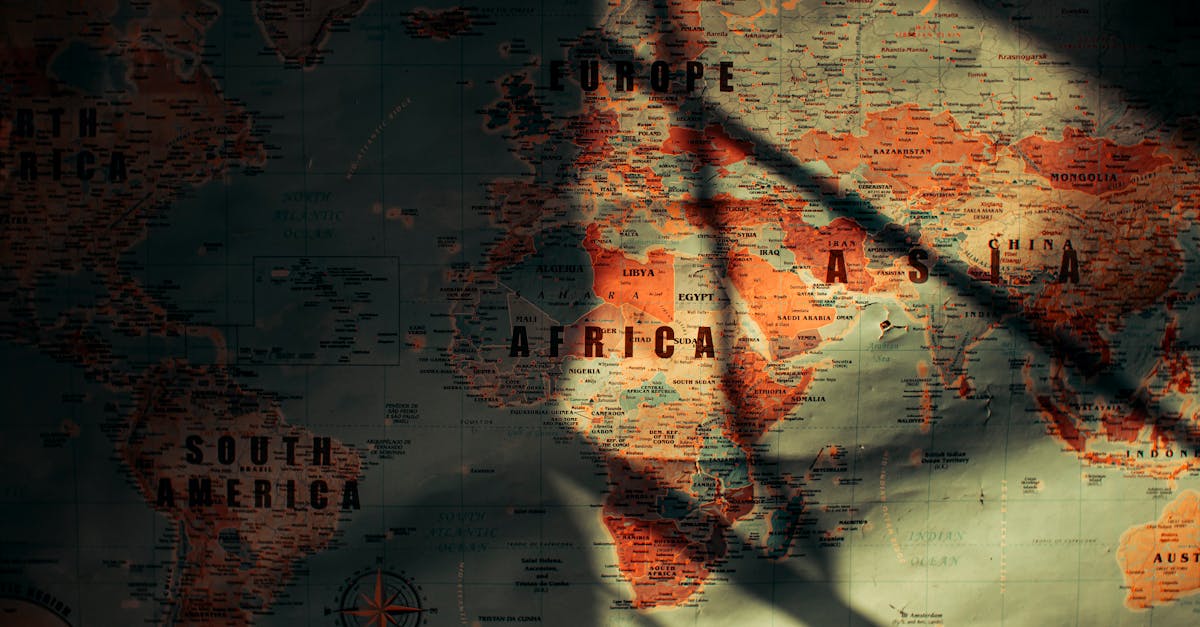
As the G20 summit wraps in South Africa, the most important story for North American readers isn’t what was said inside the conference rooms — it’s who didn’t show up.
The conclusion of the G20 summit in South Africa without a full-fledged U.S. presidential presence is being read globally as more than just a scheduling issue. It is being interpreted as a data point in a larger trend: a slow, uneven recalibration of American leadership in a world that is more multipolar, more skeptical, and more impatient with Washington’s domestic dysfunction.
According to coverage summarized by NPR and other outlets, Washington’s representation at this summit was notably diminished compared to past years. While working-level officials and envoys participated in sessions, the absence of a top-tier U.S. figure — especially the president — made a visual and diplomatic impact. For allies, it raised concerns about reliability; for rivals, it looked like opportunity.
For voters in the U.S. and Canada, the stakes are not abstract. Decisions coming out of G20 summits affect inflation, supply chains, climate policy, tech regulation, and the rules of global trade — all of which feed back into prices at North American grocery stores, job markets, and election narratives.
The choice of South Africa as host is itself significant. It underscores the G20’s gradual tilt toward the Global South and emerging economies as core players, not just guests. Johannesburg and Cape Town have, in recent years, been frequent venues for summits seeking to rebalance global economic governance away from what many countries see as a post–Cold War Western tilt.
Reports from outlets like Reuters and AP News described a summit agenda dominated by:
In each of these domains, the United States is still structurally central — as the issuer of the world’s primary reserve currency, the home of the largest tech companies, and the key security partner for several G20 members. But at this summit, that centrality wasn’t backed up by an equally central political presence.
Diplomacy is partly about policy and partly about symbolism. The absence of a U.S. president or vice president from such a major summit in Africa, at a time when Washington is trying to counter both Russian and Chinese influence on the continent, stands out.
According to international relations scholars quoted previously in outlets like The Hill and Foreign Policy, summits are less about the final joint statement and more about:
When the U.S. leader’s seat is empty — especially at a summit hosted by an African democracy that has frequently called for a more equitable global order — it leaves room for others to step forward. China’s Xi Jinping and other leaders in the BRICS orbit have, in previous summits, used such gaps to pitch alternative frameworks for trade, development finance, and digital infrastructure.
The U.S. absence in South Africa fits a longer storyline about fluctuating American engagement. Since the end of the Cold War, U.S. administrations have oscillated between expansive global leadership and domestic retrenchment:
Analysts interviewed over the years by CNN and Brookings have argued that global governance is increasingly “post-American” in form, even if not yet in substance. That doesn’t mean the U.S. is irrelevant; it means it is no longer presumed to be present, engaged, and decisive at every major forum.
South Africa’s role in the G20 — and in broader formations like BRICS — is central to the continent’s political identity. The U.S. has spent the last several years trying to rebuild its Africa relationships with a combination of security cooperation, health and climate initiatives, and selective infrastructure projects.
Yet African officials, speaking in various international forums and cited in outlets like Al Jazeera and the BBC, have repeatedly underlined a core complaint: Western partners show up episodically, and often only in crisis; China, Turkey, Gulf states, and others show up consistently, with long-term financing and clear strategic intent.
The optics of a U.S. absence at a G20 hosted in Africa reinforce that critique. It may:
For Canada, the G20 is one of the few major tables where Ottawa has a consistent and visible presence. If the U.S. is partially absent, Canada faces both a risk and an opportunity:
Canadian analysts quoted over the years by CBC and The Globe and Mail have often described the country’s foreign policy as “strategic alignment with U.S. interests, but with its own narrative.” In a scenario where the U.S. is less visibly present at key summits, Ottawa may need to decide whether to fill the gap more assertively or to lower its multilateral profile as global institutions become more fractured.
For U.S. presidents, the decision to attend or skip a summit like the G20 isn’t made in a vacuum. It reflects a calculus that blends:
According to previous reporting from Politico and The Washington Post, White House aides in multiple administrations have privately acknowledged that summits like the G20 often struggle to break through in U.S. domestic media unless there is a major crisis or a viral moment. That creates a perverse incentive: invest less in long-term, slow-burn diplomacy and more in high-drama, short-term optics.
For households in the U.S. and Canada, what happens — or doesn’t happen — at the G20 can translate into very tangible impacts over time:
According to economic commentary in outlets like The Financial Times and The Wall Street Journal, business leaders watch summits not for the final press conference, but for signals about where regulatory and geopolitical risk is trending. In that sense, an absent America is a signal in itself.
Public reaction online to the U.S. absence has been mixed and often polarized, mirroring broader debates about America’s global role.
On Reddit, discussions in political and geopolitics subforums reflected two dominant sentiments:
On Twitter/X, trending threads included:
Facebook comment threads on news stories from mainstream outlets showed more day-to-day concerns:
In global politics, “winning” a summit doesn’t necessarily mean dictating the communiqué; it often means shaping the narrative and the follow-up.
Foreign policy rarely decides U.S. elections on its own, but it shapes background narratives about competence, strength, and vision. The image of a U.S. that doesn’t consistently show up to lead — especially at summits dealing with economic stability and global crises — may feed into several talking points:
Polling data cited in recent cycles by organizations like Pew Research and Gallup has shown that a significant portion of Americans now say the U.S. should “pay less attention” to problems overseas. Yet, when major crises erupt — from pandemics to wars that affect energy markets — many of those same respondents expect decisive American leadership. This contradiction is playing out in real time in the summit circuit.
Looking ahead, several plausible trajectories emerge from this moment.
If the U.S. remains inconsistently engaged in multilateral forums, we can expect:
Under pressure from allies and domestic critics, a future U.S. administration may:
If U.S. engagement continues to be uneven, Canada may increasingly act as a “reliability anchor” within Western coalitions, especially on climate, refugee issues, and digital governance. However, Ottawa’s limited hard power means it can’t substitute for Washington — only complement it.
Summits in Africa, Asia, and Latin America will likely demand more concrete concessions from Western powers in return for diplomatic alignment — on climate finance, debt relief, technology transfer, and voting power in institutions like the IMF and World Bank. U.S. absences will be remembered and referenced in those negotiations.
For audiences in the U.S. and Canada, the closing of the G20 in South Africa without a strong American presence is a reminder that global politics doesn’t pause when Washington looks inward. Over the next one to three years, key indicators to watch include:
Global summits may seem distant and choreographed, but they are the arenas where the rules of the game are negotiated. When the U.S. leaves its chair partially empty, those rules don’t stop evolving — they just evolve without as much North American input. For citizens from Seattle to Montreal, that is not a distant diplomatic detail. It is a question about who will shape the world that, in turn, shapes their everyday lives.