Physical Address
304 North Cardinal St.
Dorchester Center, MA 02124
Physical Address
304 North Cardinal St.
Dorchester Center, MA 02124

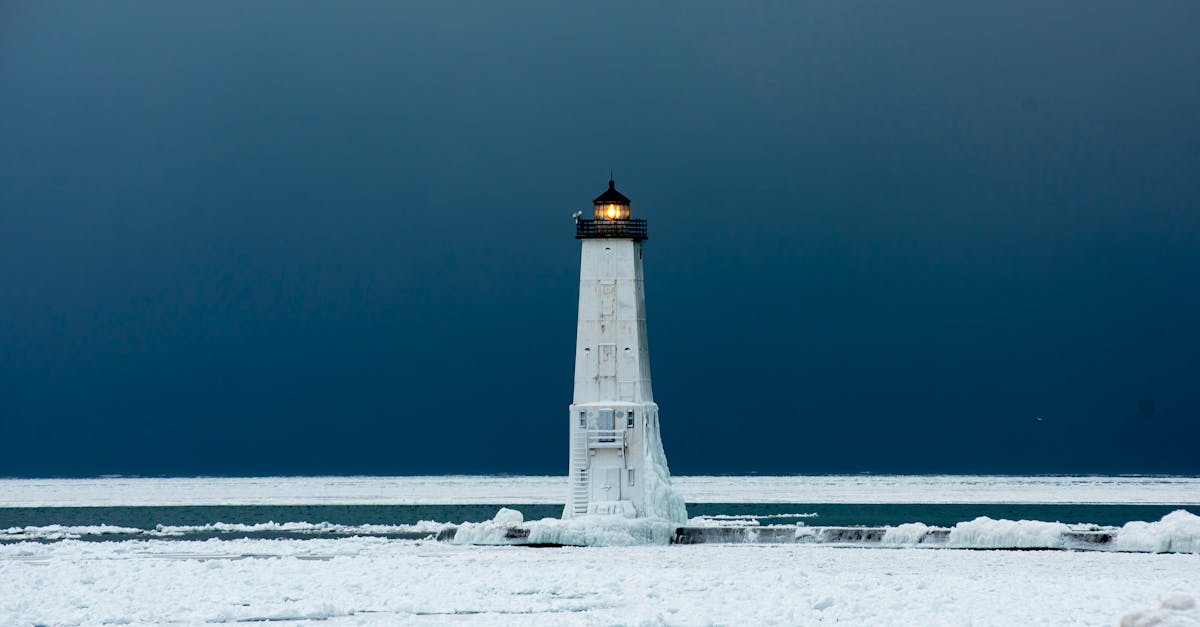
When Michiganders went to bed expecting one flavor of winter and woke up to another, it was more than a minor forecast tweak—it was a reminder of how fragile our sense of certainty has become around weather, climate, and even basic planning.
Overnight forecast changes like the one reported by MLive for Michigan’s latest snowfall system are common in meteorology. But in late November, at the start of what could be a volatile winter across the Great Lakes, they carry outsized weight for schools, city budgets, supply chains, and a public that increasingly links every snowflake—or lack of one—to broader climate anxieties.
Local outlets including MLive and regional TV stations have highlighted how projected snow totals for parts of Michigan shifted significantly between earlier day forecasts and updated overnight model runs. While exact inch-by-inch projections vary by outlet and location, the pattern is familiar: a system that once looked heavier for some areas trended lighter, while other regions—often downwind of the Great Lakes—saw increased snow potential as models refined the storm track and lake-effect setup.
According to coverage from regional forecasters affiliated with the National Weather Service (NWS), the key elements that often change overnight in a Michigan snowfall forecast include:
Those variables are updated constantly as new model data arrives, which is why an 11 p.m. forecast can look different from a 6 a.m. one. The science hasn’t failed—the resolution has sharpened.
To people in Detroit, Grand Rapids, Marquette, or Traverse City, changing snow maps may feel like indecision. In reality, Michigan sits in one of North America’s most forecast-challenging zones.
The Great Lakes turn Michigan’s weather into a high-stakes game of physics:
The National Weather Service and private meteorologists often stress that lake-effect snow is inherently “nowcast-heavy”—easier to describe and track in real time than to pinpoint perfectly days in advance. That’s why overnight forecast updates after new model runs can swing expectations so quickly.
According to coverage from outlets like CNN and weather-focused reporting on Axios, winter forecasts in North America frequently rely on a blend of multiple global and regional models: the European Centre for Medium-Range Weather Forecasts (ECMWF), the U.S. Global Forecast System (GFS), the Canadian model and a variety of high-resolution regional tools.
When those models disagree on:
local snow forecasts can change quickly as meteorologists weigh new data. Overnight, as fresh runs complete, the consensus can shift—and so can the snowfall map.
Whenever a storm fizzles or suddenly intensifies, social media quickly jumps to climate-change interpretations. The reality is more nuanced.
Long-term data from agencies like NOAA and Environment and Climate Change Canada suggest a few key trends relevant to Michigan:
This means that early-season Michigan storms, like the one in the headlines now, may feature sharper gradients between rain and snow. Just a slight nudge in temperature can transform a 6–10 inch snow event into a slushy mess or vice versa.
Analysts interviewed in past climate and weather explainers by outlets such as The Washington Post and The New York Times have noted that people may perceive winter as “wilder” or “more unpredictable” not because day-to-day forecasts are less accurate, but because small variations now decide whether a region sees a significant snowstorm or a cold rain—both socially and visually very different experiences.
For the Upper Midwest, including Michigan, a surprise change in snow totals isn’t just about commutes; it’s about money and logistics.
From metro Detroit to rural northern counties, superintendents face recurring dilemmas: close schools based on early forecasts, or risk sending buses out into deteriorating conditions if a storm overperforms. An overnight downgrade or upgrade in snowfall forecasts can force last-minute calls overruling decisions floated only hours earlier.
While there’s limited nationwide data on the exact financial cost of snow day misjudgments, transportation planners have told outlets like The Hill and local newspapers that repeated false alarms can erode public trust and complicate staffing, while missed closures can raise safety and liability concerns.
Michigan’s road agencies run on tight winter budgets. When an overnight update cuts forecast totals in half, managers may need to adjust:
Similarly, a late bump in expected accumulation forces quick scaling up. According to past reporting by the Associated Press on winter operations in Midwestern states, some counties burn through large portions of their salt and overtime budgets early in winters with repeated “near-miss” events—storms that demand almost full response but underperform the heaviest projections.
For ski hills, snowmobile rental shops, hardware stores, and independent contractors who plow driveways, the overnight downgrade of a storm can mean lost revenue. A predicted “first big snow” that fails to fully materialize often leaves ski resorts scrambling, while early snow surges can bring a short-lived boom in snowblower sales and cold-weather gear.
Analysts interviewed in regional business coverage across the Great Lakes have noted that early-season snow events are particularly important: they help set the tone for winter recreation planning and local tourism campaigns from the Upper Peninsula to northern Lower Michigan.
On Reddit, threads in subcommunities focused on Michigan, weather, and climate often adopt a wry tone. Users frequently respond to forecast shifts with a mix of humor and resignation:
On Twitter/X, trending discussion around Michigan’s snow shifts tends to split into a few camps:
Many on Twitter/X also seize on sudden forecast downgrades or upgrades to recycle broader skepticism about institutional expertise, lumping meteorology in with polling, economic projections, and public health models as “always wrong,” despite decades of data showing substantial improvements in forecasting skill.
In Facebook comment threads on stories from outlets like MLive, local TV stations, and county emergency management pages, reactions skew more practical:
Snowfall doesn’t usually decide elections, but how local government responds to winter weather is a recurring test of competence, especially in swing states like Michigan.
In cities such as Detroit, Grand Rapids, Lansing, and smaller municipal centers, plowing and salting are among the most visible local services. When an overnight forecast change catches cities underprepared or overprepared, criticism can quickly become political:
Local election coverage in Michigan and other Great Lakes states regularly notes that residents remember the winters when their streets “never seemed to get plowed on time.” Snow, in this sense, becomes a proxy for whether institutions can manage basic infrastructure under uncertainty.
Michigan, a battleground in recent U.S. federal elections, also sits at the center of debates over green energy, auto manufacturing, and climate resilience. Fluctuating winter weather adds to a broader sense of environmental flux that can influence public perception of policy discussions.
While a single change in snowfall forecast does not rewrite climate politics, repeated experiences of “weird winters” shape how voters evaluate claims about long-term climate trends. Analysts speaking to national outlets like Politico and The Hill have emphasized that Midwestern voters increasingly connect everyday weather oddities with larger narratives about environmental risk—though that connection is still filtered heavily through partisan identity.
Michigan’s overnight snow forecast change may feel hyper-local, but it illustrates themes relevant from Minnesota to Ontario to Quebec.
Canadian cities like Windsor, London, Sault Ste. Marie, and Thunder Bay experience similar challenges: lake-effect snow, fluctuating winter patterns, and increased pressure on municipal budgets. Weather-aware Canadians following coverage by outlets such as CBC or CTV can see the parallels clearly.
For both U.S. and Canadian Great Lakes communities:
Michigan’s snow volatility is, in essence, a cross-border phenomenon shaped by the same lakes and the same shifting atmosphere.
In both countries, abrupt forecast changes are pushing cities to adopt more flexible, data-driven winter strategies:
The overnight swing in Michigan’s snowfall outlook is a small but telling case study in why that flexibility matters.
Despite public frustration online, meteorologists point out that forecast quality has improved markedly. According to NOAA summaries and reporting by outlets like Reuters:
The problem is less the science and more the expectation: people want precision (How many inches on my street?) where atmospheric physics and current technology can only provide probabilities (Most likely range for your area).
In the immediate term, an overnight downgrade or upgrade in Michigan snow totals suggests:
Residents in both the U.S. and Canadian Great Lakes regions can reasonably expect more of these “near-miss” episodes as marginal-temperature storms become more frequent.
While no single event can define a trend, the pattern emerging from recent research and seasonal outlooks suggests:
Climate scientists and meteorologists, speaking to outlets such as AP News and national broadcasters in both countries, generally agree that the coming decades will not eliminate snowstorms in Michigan or Ontario; instead, they may compress snowfall into shorter, more intense events surrounded by longer stretches of milder or mixed conditions.
If there is one lesson from Michigan’s latest overnight forecast shift, it is that individuals and institutions need resilient plans that accommodate uncertainty rather than demand certainty.
Michigan’s overnight snowfall forecast shift is not just a local weather hiccup. It encapsulates a wider reality facing the U.S. and Canada: increasingly marginal winters, more complex model-driven forecasting, and a public that must navigate real risks—icy roads, school disruptions, budget pressures—under conditions of uncertainty.
Across the Great Lakes basin, people are waking up to storm maps that don’t always match what they saw before bed. That dissonance is not a failure of science; it is the visible edge of a new winter, one that demands more flexible planning, clearer communication, and a greater tolerance for the phrase few of us like to hear—but increasingly need to accept: “It depends.”