Physical Address
304 North Cardinal St.
Dorchester Center, MA 02124
Physical Address
304 North Cardinal St.
Dorchester Center, MA 02124

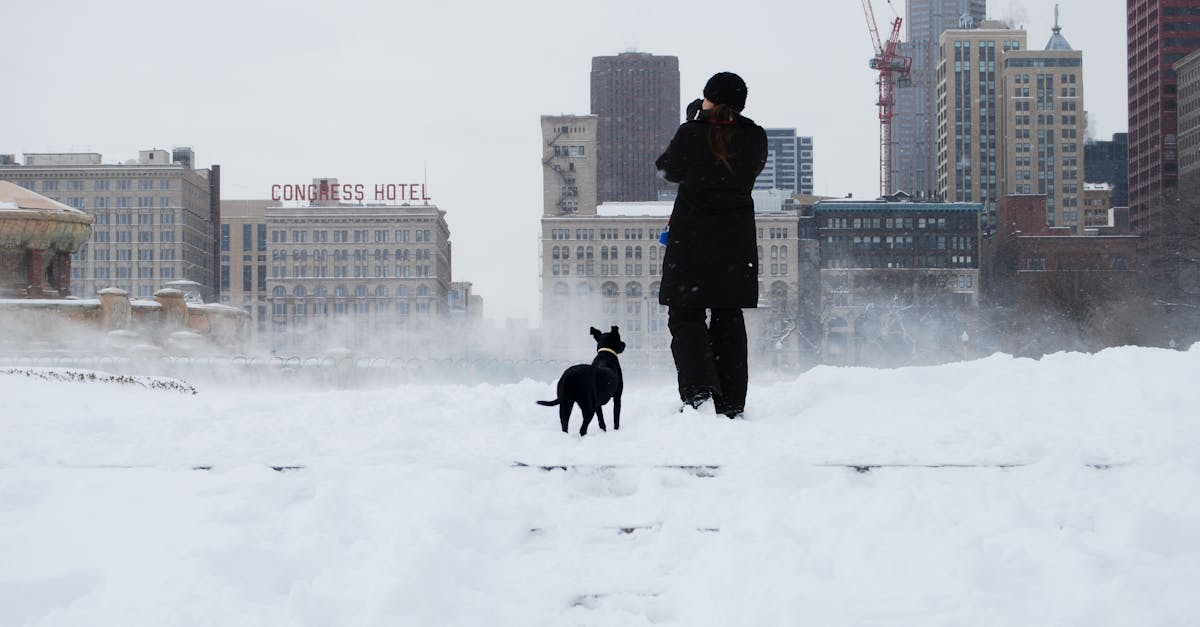
Chicago didn’t just get a winter preview this weekend — it got a data point in a much larger story. On the last Saturday of November, nearly nine inches of snow blanketed parts of the city, making it the snowiest November day on record, according to local reporting from the Chicago Sun-Times and regional National Weather Service data. Flights were delayed, streets backed up, and social feeds filled with whiteout photos. But beneath the memes and travel complaints, the storm raises deeper questions for city planners, insurers, and climate analysts across the United States and Canada.
According to preliminary figures shared by the National Weather Service’s Chicago office, bands of lake-enhanced snow and a well-timed cold front combined to dump close to nine inches of snow on parts of the metro area on that Saturday, marking the single snowiest day in November since records began in the late 19th century. Totals varied sharply across the region — typical for Midwest lake-effect systems — but the core Chicago area saw enough accumulation to snarl traffic, challenge city plows, and abruptly end what had been an unusually mild fall.
Local TV weather segments on outlets such as ABC7 Chicago and NBC5 highlighted the rapid transition: temperatures that had been seasonably cool but manageable suddenly dropped into a range where heavy, wet snow could accumulate quickly on trees, power lines, and untreated roads. Major airports, including O’Hare and Midway, reported delays and cancellations, while Chicago Transit Authority buses and trains saw crowding as some residents opted to leave their cars at home.
On the surface, a record November snow event feels like a simple rebuttal to global warming. But climate scientists have warned for years that individual cold snaps or snowstorms do not disprove long-term warming trends. Instead, they may become more volatile in a changing climate.
According to analyses regularly summarized by the National Oceanic and Atmospheric Administration (NOAA) and reported by outlets like AP News and CNN, the Great Lakes region is experiencing warmer average temperatures, later first frosts, and shifts in precipitation patterns. Warmer fall lake temperatures can actually increase lake-effect snow potential early in the season: when relatively warm lake water meets an early blast of cold air, the temperature contrast can fuel intense snow bands.
In this sense, Chicago’s record November day is not an outlier in isolation, but part of a broader pattern of climate “weirdness” — more extremes, sharper transitions, and an increasingly unreliable idea of what “normal” seasonal weather looks like. Analysts interviewed in previous coverage by The Washington Post and The New York Times have noted similar paradoxes in Buffalo’s major lake-effect events and in shifting winter patterns around the Great Lakes.
Chicago has never been a stranger to snow. The city’s weather lore is dominated by a few iconic events: the Blizzard of 1967, the brutal winter of 1979 that helped sink a mayor, and the Groundhog Day blizzard of 2011. Those storms, however, largely occurred deep in winter. Early-season snow of this magnitude is rarer.
Historical climatology data from NWS Chicago show that measurable snowfall in November is common, but extreme single-day totals are not. Most years, the month produces a few light events, often melting within days. For parts of the region to approach or exceed nine inches in one day this early in the season suggests a strong system coinciding with the right lake and temperature conditions.
Residents old enough to remember past decades commented on social media that the storm “felt like something we used to get closer to January.” While memory is often selective, long-term data does suggest that shoulder seasons — fall and spring — are where some of the most noticeable shifts in weather volatility are emerging.
Major snowfalls in Chicago are not just meteorological events; they’re political and logistical tests. Snow response has toppled mayors before. Local political historians often point back to the 1979 storm, when what many saw as a slow, chaotic cleanup effort helped fuel voter anger and contributed to the defeat of then-Mayor Michael Bilandic, a story frequently revisited in local Chicago media.
This weekend’s storm was comparatively well-managed, at least in early accounts. According to local reports, city officials had plows on standby and salt trucks pre-positioned after forecasts highlighted significant accumulation risk. Chicago’s Department of Streets and Sanitation reportedly deployed its full snow fleet overnight, focusing first on main arteries and transit routes.
Still, social media posts and local TV interviews suggested uneven impacts. Neighborhoods further from downtown and lower-traffic side streets saw slower clearing, which is typical but remains a political flashpoint. Residents in some South and West Side communities complained online about lagging plow coverage compared to wealthier and more tourist-heavy areas along the lakefront. These long-running equity concerns often resurface every major weather event, framing snow removal not just as a service issue but as a proxy for broader debates over who gets investment and attention in American cities.
Heavy snow is costly, even when it doesn’t reach full blizzard status. According to previous estimates cited by Reuters and Bloomberg in coverage of past winter storms, major snow events can cost metropolitan areas millions of dollars per day in lost productivity, overtime, and disruptions. Saturday’s record day, falling on a weekend, likely softened some direct commuter impacts but amplified others.
Key economic angles include:
What used to be framed as “once in a decade” storms appear to be happening more frequently across North America. That perception — backed by an increase in extreme weather events documented in reports synthesized by NOAA and Environment and Climate Change Canada — is altering how insurers, mortgage lenders, and property managers think about risk.
While a single heavy snow day is far less catastrophic than a hurricane or major flood, it feeds into longer-term actuarial models. More freeze-thaw cycles and early heavy wet snow can increase roof damage, tree failures, and roadway deterioration. Over time, those costs show up in higher insurance premiums and larger maintenance budgets — costs often passed down to renters and homeowners.
For Canadian cities along the Great Lakes corridor — including Toronto, Hamilton, and Windsor — Chicago’s record November event is a reminder of their own vulnerability to early-season lake-effect bursts. Provincial and municipal budget planners in Ontario and Quebec are watching U.S. patterns as a kind of preview of what may be coming to their regions, especially as lake temperatures trend warmer into late fall.
Every major weather event in a big American city intersects with transportation policy — and Chicago is no exception. The storm landed as debates over public transit funding, road maintenance, and climate resilience are underway across the U.S. and Canada.
Analysts previously told outlets such as The Hill and Politico that urban transportation systems are being squeezed from both ends: aging infrastructure on one side and more frequent extreme weather on the other. Saturday’s storm was a relatively contained test, but it underscored several policy questions:
On Twitter/X, Chicago’s record snow day quickly became a regional trending topic. Many posts leaned into dark Midwestern humor: photos of half-buried cars, jokes about the “Lake Michigan Industrial Snow Complex,” and memes comparing the city’s residents to Arctic explorers. Some Canadians chimed in, gently mocking Chicagoans while acknowledging that similar storms hit cities like Montreal and Ottawa earlier each year.
At the same time, more serious threads emerged. Many on Twitter expressed a mix of awe and unease — marveling at the beauty of the snowfall while worrying about what it suggests for future winters. Some users pointed to national climate reports and asked if this kind of volatility was the “new normal.”
On Reddit, local subreddits like r/chicago featured practical posts — snow removal tips, recommendations for tire shops, and debates over whether landlords were sufficiently clearing walkways. Multiple threads veered into broader conversation about climate change, with commenters questioning whether city and state governments are adequately preparing for more extremes on both ends of the temperature spectrum.
Facebook comment threads under local news stories showed a familiar divide: some residents framed the storm as “just winter in the Midwest,” while others argued that the combination of extreme heat waves in summer and extremes of snow or rain in the shoulder seasons points to an unmistakable pattern. Several commenters highlighted the impacts on seniors, disabled residents, and unhoused people, emphasizing that weather events quickly become crises for those with the fewest resources.
Major storms tend to expose an uncomfortable truth: not everyone has the same capacity to ride them out. In both the U.S. and Canada, researchers have documented that low-income and marginalized communities are often the least prepared for climate-related disruptions — whether heat waves, floods, or winter storms.
In Chicago, early anecdotal accounts and social posts suggested that:
Similar issues have been documented in cities like Detroit, Cleveland, and Winnipeg, where older housing stock, limited mobility options, and strained social services intersect with extreme weather. Policy advocates argue that each high-impact storm should be treated as a rehearsal for larger climate emergencies, prompting investments in accessible warming centers, targeted snow-removal plans, and better emergency communication for non-English speakers and those without smartphones.
For readers in Canada, Chicago’s record snow day is less a distant curiosity and more a parallel case study. The Great Lakes basin is highly interconnected, meteorologically and economically. What happens in Chicago often echoes, in some form, in Toronto, Hamilton, Windsor, and even farther east in cities like Kingston and Montreal.
Canadian climate assessments, summarized by Environment and Climate Change Canada and reported by CBC News and CTV, have noted a trend toward warmer average winter temperatures but increased potential for heavy precipitation events. As in the Midwest, that can mean more freeze-thaw cycles, heavier wet snows, and more intense storms when cold air fronts meet moist air over relatively warm lakes.
Chicago’s experience underscores several cross-border priorities:
Weather is rarely just weather in big-city politics. How leaders communicate before, during, and after major events often matters as much as the objective conditions. In Chicago, a city with a long memory for snow-related political fallout, mayors tread carefully around winter storms.
In recent years, U.S. mayors and governors have increasingly linked extreme weather to broader climate policies, using storms, floods, and heat waves as evidence for investments in green infrastructure, emissions reduction, and emergency preparedness. Coverage by outlets such as NPR and The Guardian has highlighted how local leaders often fill the communication gap left by more polarized federal climate debates.
In the wake of this record November snowfall, Chicago’s current leadership faces several narrative choices:
Each path carries political risk and opportunity, not only in Chicago but in other U.S. and Canadian cities watching how constituents respond to weather-linked climate narratives.
Television and online coverage of the storm leaned heavily on visuals: snow-packed streets, stuck vehicles, kids sledding, and shimmering tree branches. Local stations and national outlets often treat big snow days as high-engagement content, pairing on-the-ground reporters with animated meteorologists.
Yet the framing matters. According to media studies research frequently discussed in journalism forums and coverage by outlets like Columbia Journalism Review, storms are often reported as isolated spectacles rather than contextualized within climate trends and infrastructure challenges. When they are framed purely as quirky anomalies — “Can you believe this much snow in November?” — audiences may miss the underlying structural story.
Some digital-native outlets and climate-focused newsletters have tried to fill that gap, using events like Chicago’s record day to explain how lake-effect dynamics interact with long-term lake warming, and why early heavy snow can coexist with decreasing overall frost days. Over time, that approach could influence public understanding — and eventually policy support — on both sides of the border.
One record-breaking day cannot predict an entire season, but it can offer hints. Forecasters cited by national outlets like CNN and The Weather Channel have noted several winter 2025–26 factors: sea-surface temperature patterns in the Pacific, lingering El Niño/La Niña effects (depending on the current phase), and above-average temperatures in the Great Lakes during fall.
Early heavy snow in Chicago suggests a few possibilities:
For Canadians in the Great Lakes and Prairie provinces, these patterns are familiar — and likely to intensify. While exact outcomes are uncertain, many climate and weather experts emphasize that planning for volatility rather than “average” conditions is becoming the smarter bet.
Beyond the broader political and climate implications, Chicago’s record November snowfall offers some practical reminders for individuals across the U.S. Midwest and central/eastern Canada:
Chicago’s snowiest November day on record will, for many, be remembered as a day of inconvenience and beauty — kids sledding, skyline photos under a white shroud, a rude shock for those who hadn’t yet switched their wardrobes from fall to winter.
But as cities across the United States and Canada navigate a century defined by climate disruption, storms like this also function as early warnings. They stress-test infrastructure, expose inequities, and challenge long-held assumptions about seasonal norms.
Whether policymakers treat this storm as just another Midwestern winter quirk or as a data point in a much larger transformation will shape how prepared Chicago — and its cross-border peers — are for the next record-setting day, whatever form it takes.