Physical Address
304 North Cardinal St.
Dorchester Center, MA 02124
Physical Address
304 North Cardinal St.
Dorchester Center, MA 02124

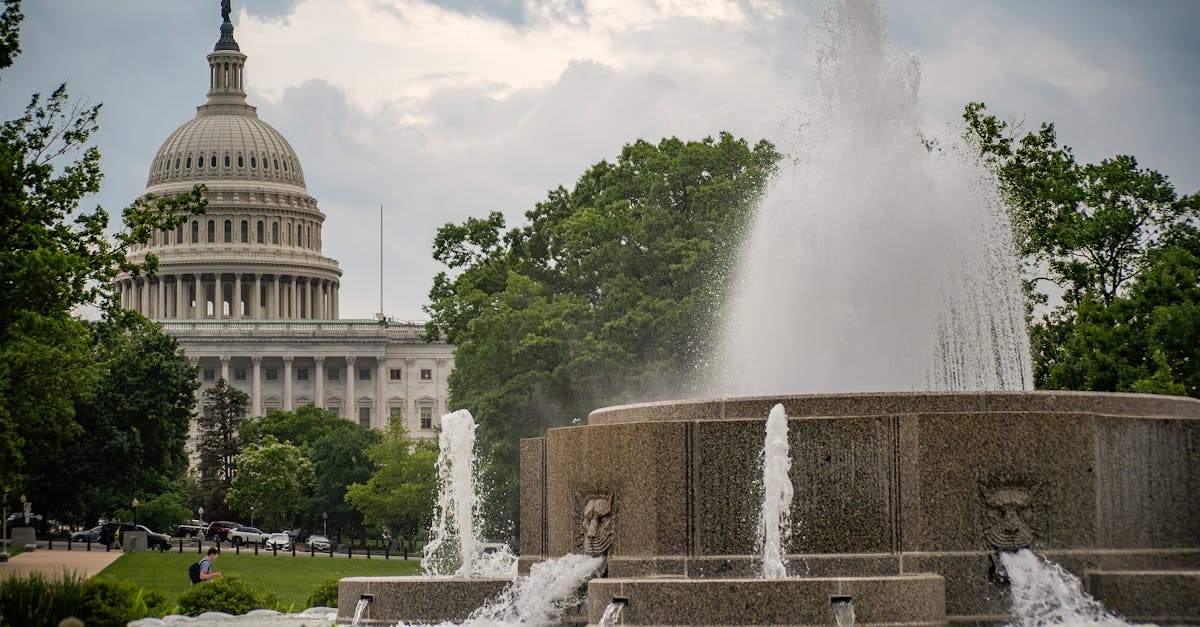
As one wounded Guard member is reported dead and Washington reels, the incident exposes the fragility of U.S. democratic norms, the politicization of security forces, and a nation trapped between fear and fatigue.
According to early reports carried by CBS News and other major outlets, a shooting involving members of the D.C. National Guard in Washington, D.C. has left multiple people wounded. Former President Donald Trump publicly stated that one of the injured Guard members had died, a claim that circulated widely on cable networks and social media while officials were still working to confirm details.
As of publication, official law enforcement statements remain limited and cautious. Metropolitan Police and federal officials have emphasized that the investigation is ongoing, and they have not released a full public narrative of the incident, the shooter’s identity, or motive. This information vacuum has created a familiar modern pattern: a deadly event, partial facts, rapid political framing, and a flood of online speculation.
Major news organizations such as CNN, Reuters, and the Associated Press have focused on verifiable basics: shots fired, National Guard personnel among the victims, a quickly secured scene, and a coordinated response by local and federal authorities. But it is the political and symbolic context—National Guard troops under fire in the nation’s capital—that is already shaping how this incident is being interpreted across the U.S. and Canada.
The National Guard occupies a unique space in American political culture. It is both civilian and military, local and federal, an institution that often stands at the intersection of domestic unrest and national authority. From civil rights marches of the 1960s to the post-9/11 era, Guard units have been deployed to manage crises that are not quite wars but far more than routine law enforcement.
In the last decade, the Guard’s political salience has grown sharply:
Having Guard members shot in or near this same political geography—within Washington, D.C.—is not just a crime story. It is a stress test for a political system that has increasingly relied on uniformed personnel to manage its domestic conflicts, from elections to demonstrations.
Trump’s assertion that one of the wounded Guard members had died is emblematic of how political leaders now operate in real time, sometimes ahead of confirmed public safety information. While the former president has every incentive to communicate quickly to his base, this speed raises familiar questions about accuracy and responsibility.
According to cable news coverage on CNN and MSNBC, federal and local officials were notably more cautious, emphasizing that notifications to families and proper confirmation procedures must come before public announcements. This split in approach—unverified political statement vs. methodical official process—mirrors what the country witnessed during other high-tension episodes, including the early hours of the January 6 attack and various mass shootings.
For Trump allies, his rapid claim is framed as leadership and empathy for the troops. For his critics, it reinforces a pattern of releasing unverified or premature information into an already polarized information environment.
Washington, D.C. has been on edge for years. A city once defined by traditional bureaucratic calm now lives with permanent security architecture: jersey barriers, Capitol fencing (at times), armored SUVs, and the visible presence of armed federal agencies. The psychological effect on both residents and the national psyche is significant.
Analysts quoted in outlets like The Washington Post and The Hill have long argued that the post–January 6 era transformed D.C. from a symbol of institutional stability into a visible reminder of how fragile American democratic order can feel. A shooting that directly involves National Guard members doesn’t just add to a crime tally; it feeds a narrative that the institutions meant to protect the system are themselves in danger.
In this context, the incident risks becoming another data point in a running story of political and physical insecurity: lawmakers receiving threats, judges under protection, election workers harassed, and now, uniformed Guard personnel under fire near the nation’s political core.
Early reaction from conservative commentators on X (formerly Twitter) and right-leaning talk radio, as aggregated by media monitors and reported by outlets like Mediaite, tends to emphasize rising violence, perceived chaos under Democratic leadership, and the idea that uniformed personnel are under increasing attack. Some voices tie the incident to broader claims of a “war on law enforcement” and argue for more aggressive domestic security policies.
In these narratives, Trump’s quick statement about the reported death of a Guard member becomes part of a broader assertion that he is aligned with the military and law enforcement in contrast to what they portray as an indifferent or hostile political establishment.
Progressive commentators and many mainstream liberal voices, including on MSNBC and among popular political podcasts, have focused more on the dangers of politicizing incomplete information. Some highlight the risk that early unverified claims could inflame tensions or inspire copycat acts. Others warn that the incident could be used to justify harsher crackdowns on demonstrations, immigration, or dissent, depending on how the shooter’s background ultimately emerges.
Several analysts who have previously spoken to outlets like The New York Times and Vox about post–January 6 security policy have already begun framing the shooting as evidence of the costs of normalized political violence, whatever the specific motive turns out to be.
More centrist and institutional voices—former national security officials, retired generals, and think-tank analysts interviewed on CNN and PBS—are concentrating on operational questions: How did this happen? Were there lapses in security posture? How should Guard deployments in urban settings be reassessed? Their core concern appears less partisan and more systemic: a country that must now ask not only how to keep politicians safe, but how to keep the people protecting those politicians safe as well.
Social media reaction in the hours following the incident has been intense but fragmented.
On Reddit, discussions in major political and news subforums show a mix of empathy and deep cynicism. Many users expressed condolences for the Guard members and their families, while simultaneously questioning the reliability of early reports—particularly Trump’s unconfirmed death announcement.
Common themes included:
On X, according to trending topic analysis reported by several digital media outlets, reactions are both extreme and instantaneous. Many users expressed solidarity with the Guard, calling them “heroes under fire” and demanding swift justice. Others challenged Trump’s statement as premature, sharing screenshots of earlier episodes where incomplete or incorrect information circulated after violent attacks.
Hashtags calling for “law and order” trended alongside posts warning against using the tragedy to justify broad crackdowns on protests, immigrants, or political opponents. This online split reflects a deeper cultural division in how Americans now interpret any act of violence near the centers of power: either as proof of failing control that demands stronger state authority, or as potential pretext for overreach.
Facebook comment threads under local D.C. news pages indicate a more community-driven response. Many residents described feeling unsafe, referencing past lockdowns, bomb scares, and security alerts. People asked practical questions—road closures, school impacts, transit disruptions—over grand political takes, underscoring how for locals, national crises are also daily life interruptions.
This shooting cannot be separated from the legacy of January 6, 2021. The extended deployment of the National Guard in the capital after the Capitol attack, widely documented by AP News and others, cemented the image of the Guard as a last line of defense between democratic institutions and violent upheaval.
In the years since, threats against members of Congress, election officials, and judges have increased. The Justice Department and the U.S. Marshals Service have warned repeatedly about the volume and seriousness of violent rhetoric. Political scientists quoted in journals and major outlets like The Atlantic have argued that the U.S. is experiencing a slow normalization of political violence—not necessarily organized civil war, but a persistent background of threats, intimidation, and sporadic attacks.
When violence touches the National Guard in the capital, it reinforces this sense that no protective layer is immune. That perception alone can have political effects: more funding for security, more acceptance of extraordinary measures, but also more public anxiety about the health of the system itself.
Violence involving uniformed personnel typically accelerates the gun control debate, even when key details (type of weapon, acquisition method, motive) are still emerging. According to prior analysis in The Guardian and USA Today, mass shootings and high-profile acts of gun violence generally spark a short-lived spike in support for stricter regulation, followed by policy gridlock.
This incident may follow a similar trajectory, but the Guard angle alters the framing in subtle ways:
The U.S.–Canada contrast is also notable. Canadian commentators and analysts, writing in outlets like the CBC and The Globe and Mail after previous U.S. incidents, often highlight that while Canada has seen its own political extremism and isolated violent events, tighter national gun laws and different political incentives help limit the frequency and scale of such incidents. For Canadian audiences, this D.C. shooting is less about local policy than about watching a neighboring democracy struggle with problems that feel increasingly structural.
One of the most sensitive topics in U.S. political analysis is the boundary between civilian politics and military institutions. The National Guard, operating under both state and sometimes federal authority, is particularly exposed to this tension.
Experts in civil-military relations, previously cited by Brookings, Foreign Affairs, and The Hill, have warned about several converging risks:
The D.C. shooting puts all of these issues into sharper relief. If further reporting shows any political or ideological motive behind the attack, the pressure to interpret it through a partisan lens will be overwhelming. Even if the motive proves personal or non-ideological, the location and victims ensure it will still be read against a backdrop of political instability.
In the next few days, several developments are highly likely, given how similar incidents have unfolded in recent years:
Beyond the news cycle, the deeper risk is the erosion of institutional legitimacy. Political scientists and sociologists interviewed in outlets such as Politico and academic journals have warned that democracies rarely collapse in a single dramatic coup; more often, they experience a “slow drip” of trust loss, as citizens come to see political violence, threats, and emergency measures as normal.
This incident contributes to that slow drip in several ways:
For Canadians watching from across the border, this is both a cautionary tale and a geopolitical concern. Analysts in Canadian media have repeatedly emphasized that instability in the U.S.—even if limited to sporadic violent episodes—has economic, security, and cultural impacts north of the border, from trade volatility to the cross-border spread of conspiratorial narratives.
Several policy and cultural shifts could alter the trajectory that this incident exemplifies, though none are politically easy:
None of these solutions will be quick. They require political will at a moment when distrust is high and incentives often reward outrage rather than restraint.
For readers in the U.S. and Canada trying to understand where this is heading, several key indicators in the coming days and weeks will matter more than any single soundbite:
The D.C. National Guard shooting is still, in immediate terms, a developing law enforcement matter. But in political and cultural terms, it is already a snapshot of a country living with overlapping anxieties: about violence, about democracy, about truth, and about the institutions tasked with keeping all three intact.
As officials confirm facts and families grieve, the biggest question for the U.S.—and for Canadians watching their closest partner—is whether this will be remembered as another grim entry in a growing list of normalized political shocks, or as one of the jolts that finally forces a reckoning with the dangerous equilibrium America has drifted into.