Physical Address
304 North Cardinal St.
Dorchester Center, MA 02124
Physical Address
304 North Cardinal St.
Dorchester Center, MA 02124

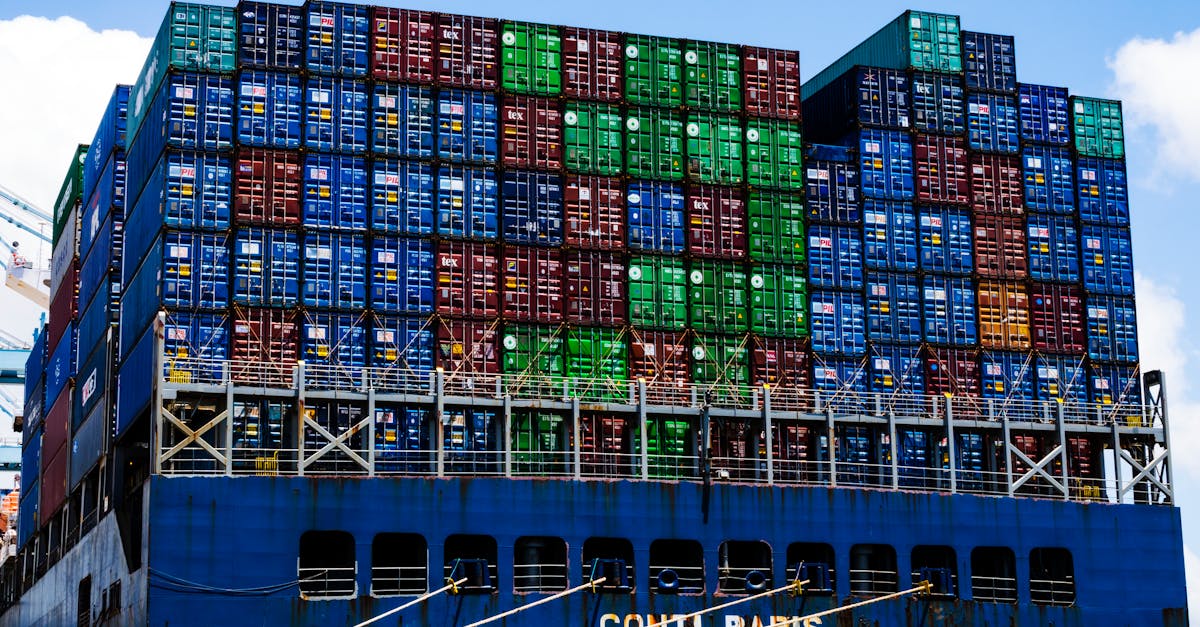
Los Angeles, November 23, 2025 — A massive cargo ship fire in the Port of Los Angeles was declared “nearly contained” overnight, just hours after authorities lifted a shelter-in-place order that had briefly frozen parts of the nation’s busiest container hub. The incident, first reported under the headline “Cargo ship fire in Los Angeles nearly contained after shelter-in-place order lifted”, has quickly become a flashpoint in debates over port safety, supply chain resilience, and the hidden dangers of modern maritime trade.
Officials say the fire, which erupted in the hold of a large container vessel docked at a Los Angeles berth, triggered alarms across multiple agencies and forced the temporary shutdown of nearby terminals. At one point, more than 120 firefighters and specialized hazardous-materials teams were on scene, battling intense heat and thick, acrid smoke.
“It could have been much worse,” one port official admitted off the record. Yet for residents who received abrupt alerts to stay indoors and close windows, and for shippers watching vessels stack up offshore, the near-miss is a stark warning: the modern cargo ship is a floating warehouse of chemical, electrical, and logistical risk.
According to preliminary statements from the Los Angeles Fire Department (LAFD) and the U.S. Coast Guard, the cargo ship fire broke out late Sunday into the early hours of Monday local time within a stack of containers aboard a foreign-flagged vessel docked at the Port of Los Angeles. Initial calls described heavy smoke coming from midship containers, with alarms triggering both on the vessel and across port security networks.
By early Monday, firefighting tugs were blasting water at the vessel’s hull while onboard crews and LAFD teams attempted to localize the blaze inside several container bays. The complexity was immediate: mixed cargo, partially unknown manifests, and the ever-present risk that at least some containers could hold hazardous materials, lithium-ion batteries, or flammable chemicals.
Authorities issued a shelter-in-place order for portions of the Wilmington and San Pedro areas, instructing residents to remain indoors, shut windows, and limit outdoor activity due to air quality concerns. Port operations in the immediate vicinity were temporarily halted. Trucks backed up at terminal gates, and vessel movements were limited as a safety buffer was established around the burning ship.
As of the latest updates on November 23, 2025, officials say the cargo ship fire is “nearly contained”. The most intense flames have been knocked down, with firefighters focusing on hot spots buried deep in the container stacks. Thermal imaging drones are being used to identify residual heat zones and prevent re-ignition.
There are no confirmed fatalities, and early reports suggest only limited injuries — mostly smoke inhalation and minor trauma among crew and first responders. However, several containers are believed to be total losses, and questions remain about what exactly burned inside the affected bays.
The Coast Guard has established a safety zone around the vessel, and environmental teams are monitoring potential runoff and air emissions. While the shelter-in-place order has been lifted, local health agencies are advising residents with respiratory conditions to remain cautious, given earlier plumes of smoke visible across stretches of the harbor area and even from certain vantage points along the 110 and 710 freeways.
Port officials stress that container operations have resumed in areas deemed safe, but the incident has highlighted just how quickly a single shipboard emergency can ripple across an interconnected logistics ecosystem — and how thin the margin of error can be when megaships loaded with complex cargoes come into urban harbors.
On the surface, the Los Angeles cargo ship fire may look like a localized industrial accident that was ultimately brought under control. In reality, it exposes multiple fault lines running through global trade, port safety, and urban planning.
1. The Port of Los Angeles is a critical artery of U.S. commerce. Together with the neighboring Port of Long Beach, it handles roughly a third of all containerized imports into the United States by volume. Any disruption — even a temporary one — can add friction to already fragile supply chains, from consumer electronics and apparel to auto parts and industrial components. A single day of constrained operations at LA can translate into delays that echo all the way to Midwestern factories and East Coast storefronts.
2. Cargo is more hazardous — and opaque — than it appears. Modern container ships carry staggering mixes of goods: chemicals, batteries, fertilizers, industrial powders, flammable liquids, and consumer products containing high-energy components. Misdeclared or undeclared hazardous materials are a persistent problem. A fire inside just a handful of containers can quickly escalate if those containers hold reactive or explosive cargo.
3. Cities and ports are deeply intertwined. The Port of Los Angeles is not an isolated industrial island. It is embedded into dense communities, with schools, homes, and small businesses sitting just beyond the port perimeter. The need for a shelter-in-place order underscores that shipboard incidents are not purely maritime affairs; they can become public health and environmental concerns in minutes.
4. Reputational and regulatory stakes are rising. Each high-profile maritime fire feeds a broader narrative: that shipping has not kept pace with the risk profile of modern cargo. Regulators, insurers, and shippers are already under pressure to tighten rules around hazardous materials declaration, shipboard fire systems, and port emergency planning. This Los Angeles incident, occurring at such a high-visibility port, will add fuel to that push.
In short, this is not only about one ship and one fire. It is about how a twenty-first-century trade system leans on twentieth-century safety assumptions — and how often the margin between a contained emergency and a multi-billion-dollar catastrophe rests on luck, weather, and the speed of first responders.
As plumes of smoke rose over the harbor, social media feeds filled with eyewitness photos, speculation, and anxiety — especially from residents in Wilmington and San Pedro who woke to emergency alerts on their phones.
A rapidly growing thread on r/LosAngeles dissected official statements and user updates:
On TikTok, short clips of the smoke over the harbor and flashing emergency vehicles pulled in hundreds of thousands of views, with creators overlaying commentary about environmental justice, supply chain chaos, and even conspiratorial riffs about “what they’re really shipping.”
The tone across platforms is revealing: less surprise that a fire happened, more frustration that the full scope of the risk is rarely discussed until an emergency alert interrupts daily life.
Behind the dramatic imagery of a burning cargo ship lies a series of technical, regulatory, and economic questions that industry experts have been sounding the alarm on for years.
Over the last two decades, cargo ships have grown dramatically in size and capacity. Yet, as Dr. Elena Ramos, a maritime safety researcher at the fictitious Pacific Institute for Port Resilience, notes, “firefighting technology and regulation haven’t scaled at the same pace as ship volume.”
Ramos explains that containers are stacked in dense, high towers, often four, five, or more levels above deck, with minimal separation between potentially incompatible cargoes. Once a fire starts deep inside a stack, direct access can be extremely limited.
“Crews are essentially attacking from the outside, often without knowing what’s burning,” she says. “If containers are misdeclared or documentation is incomplete, you don’t know whether you’re dealing with plastics, corrosives, or lithium batteries. Each behaves very differently under heat.”
The Los Angeles cargo ship fire, based on initial reports, appears to fit this pattern: heat and smoke emanating from interior containers, followed by a cautious, methodical assault to prevent the blaze from jumping across stacks.
Industry insiders repeatedly point to misdeclared hazardous material as a systemic weak point. A 2024 study widely cited in shipping circles estimated that up to 5–10% of containers globally may contain undeclared or incorrectly declared dangerous goods. Even if the real number is lower, the implication is clear: fire crews are often flying blind.
“Think of it as a data problem masquerading as a safety issue,” says Anthony Li, a supply chain risk consultant based in Long Beach. “If port and shipboard systems had high-fidelity, real-time cargo data, you could pre-position firefighting resources, alter stowage plans, and respond more intelligently. Instead, we still rely heavily on static paperwork and trust.”
Li predicts that the Los Angeles incident will intensify calls for digitally verifiable cargo manifests, potentially tied to blockchain-based shipment records or AI-driven anomaly detection that flags suspicious or inconsistent declarations before a vessel even docks.
Beyond the technical dimensions, the near-containment story is also a reminder of how port risks intersect with local communities. Neighborhoods around the Port of Los Angeles — especially in Wilmington and parts of San Pedro — have been vocal for years about cumulative exposure to diesel emissions, noise, and industrial hazards.
“This fire reinforces what residents already know: they are living on the front line of global trade,” argues Lisa Herrera, an environmental policy advocate with the (fictional) Harbor Health Alliance. “When something goes wrong on a ship, the people breathing that air, hearing those sirens, and receiving those shelter-in-place orders are almost always from communities that have historically carried the environmental burden of port operations.”
Herrera points to the shelter-in-place order as both a necessary precaution and a political symbol. “If the cargo ship fire had escalated, you might have needed wider evacuations, more significant air quality interventions. The question is: how much risk is acceptable, and who gets to decide?”
Economically, each shipboard fire becomes a case study in liability. Insurers must parse whether the cause traces back to ship operators, shippers who misdeclared cargo, or even port terminal practices. Claims can quickly run into tens or hundreds of millions of dollars when you account for cargo loss, port disruption, and potential environmental remediation.
“Marine insurers have been steadily raising premiums for certain classes of hazardous cargo,” notes Daniel Cho, a West Coast underwriter who focuses on marine risk. “An incident like this at Los Angeles — high profile, high throughput, high stakes — will be pored over in boardrooms around the world.”
Cho anticipates a familiar pattern: “After major incidents, you see a spike in interest in safety investments, sensors, early-detection systems, and training. The challenge is that freight markets are brutally cost-competitive. There’s ongoing tension between shaving dollars off shipping rates and investing in systems that don’t show immediate profit but can prevent rare, catastrophic events.”
Even as this fire is being contained, several technology pilots underway at global ports suddenly feel more urgent. These include:
“We’re on the cusp of a transition from reactive to predictive port safety,” argues Ramos. “The Los Angeles cargo ship fire might become a catalyst if decision-makers see how quickly a near miss could have spiraled under different wind conditions or with different cargo profiles.”
As the physical fire cools, a second wave of responses is already in motion — investigative, regulatory, commercial, and political.
In Washington and Sacramento, lawmakers focused on transportation and environmental justice are almost certain to seize on the incident as evidence for stronger oversight. That could mean:
Expect hearings, white papers, and renewed lobbying from both industry and advocacy groups over the coming months.
In the near term, the LOS ANGELES cargo ship fire is unlikely to trigger a systemic crisis. But localized delays and diversions are probable. Shipping lines may temporarily reroute select vessels to neighboring terminals or to the Port of Long Beach while safety inspections and clean-up proceed.
Spot freight rates on certain trans-Pacific lanes could see a brief upward nudge if berth capacity is constrained or if carriers introduce risk surcharges. Retailers and manufacturers already coping with peak-season volatility will watch the situation closely, especially if any cargo involved in the fire included high-demand goods like electronics or auto parts.
In the longer term, the incident may accelerate investment in risk mitigation technologies and resilience strategies — from more diversified port routing to expanded use of predictive analytics in cargo planning.
The near-containment of the Los Angeles cargo ship fire on November 23, 2025 is, on paper, a success story. No mass casualties. No catastrophic explosion. Port operations largely resuming within hours of the initial shelter-in-place order being lifted.
But beneath that relatively positive outcome lies a deeper narrative about the hidden fragility of global trade. One ship, one stack of containers, one spark — and the largest container port in America briefly flirts with a scenario that could have forced prolonged closures, large-scale evacuations, and significant economic disruption.
Residents near the harbor woke to alerts that turned an abstract conversation about port risk into something urgent and personal. Industry professionals saw a familiar pattern: complex cargo, incomplete information, and first responders doing battle against both physics and uncertainty. Policymakers and insurers saw another case study in the growing mismatch between the scale of maritime commerce and the robustness of the safety systems meant to contain its worst-case scenarios.
As investigations proceed, one thing is already clear: the Los Angeles cargo ship fire will not be remembered only as a nighttime blaze quickly brought under control. It will be cited in boardrooms, hearings, and community meetings as a pivotal example of why ports, carriers, and regulators must move faster — on transparency, on technology, and on community protection — before the next incident tests the system under less forgiving conditions.
The smoke may clear from the harbor skyline within days. The questions it raised about how we move, track, and safeguard the lifeblood of global commerce will linger far longer.