Physical Address
304 North Cardinal St.
Dorchester Center, MA 02124
Physical Address
304 North Cardinal St.
Dorchester Center, MA 02124

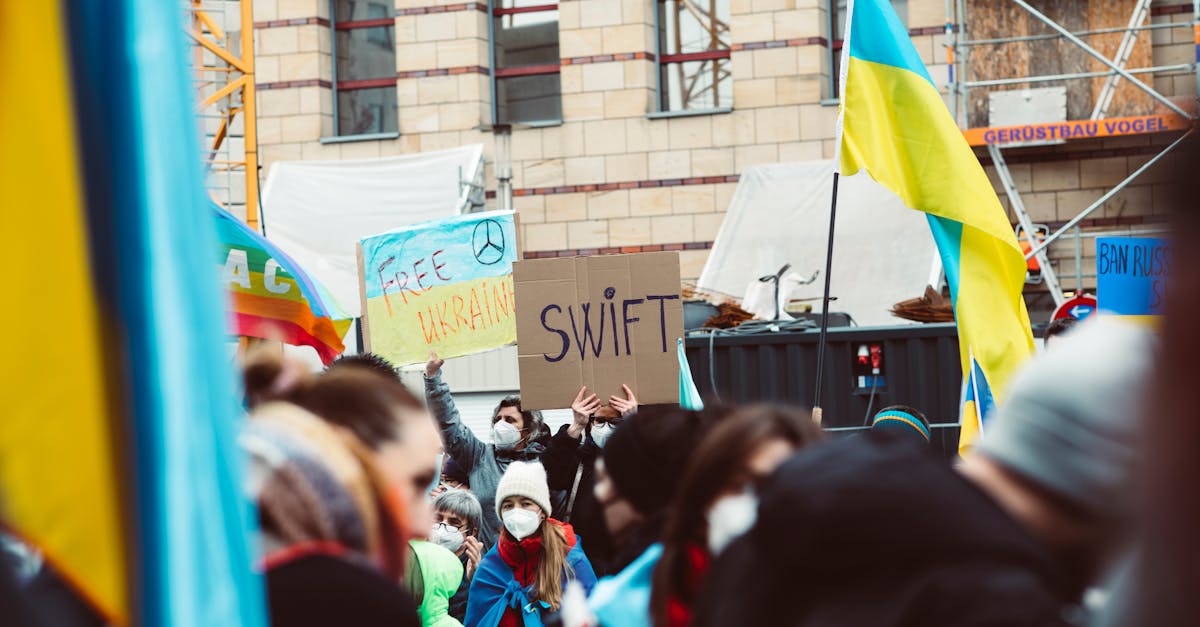
Russian President Vladimir Putin has publicly signaled that Moscow is ready for “serious” talks on a Ukraine peace deal, breaking months of pointed ambiguity about the war’s endgame. The comments, reported by outlets including CNBC and wire services, come as the conflict grinds toward its fourth year and Western support faces new political headwinds in Washington and across Europe.
For audiences in the United States and Canada, the timing and framing of Putin’s remarks matter as much as the words themselves. This is less a sudden dove-like turn and more a calibrated move in a wider information, economic, and political struggle—one that increasingly runs through Congress, European capitals, and public opinion feeds on X, Reddit, and TikTok as much as through trenches in Donbas.
According to reports carried by CNBC, citing Russian state media and international wire services, Putin said Moscow is ready for “serious dialogue” on Ukraine, framing Russia as open to talks but insisting that any settlement must reflect what he calls “realities on the ground” and Russia’s “legitimate interests.”
That phrase—“realities on the ground”—is doing a lot of geopolitical heavy lifting. In recent speeches and previous statements, the Kremlin has defined those “realities” to include Russia’s claimed annexation of four Ukrainian regions (Donetsk, Luhansk, Zaporizhzhia and Kherson), in addition to Crimea. Ukraine and virtually all Western governments reject those claims outright.
Notably missing in Putin’s latest signaling:
So while the word “serious” caught headlines, the substance still appears to condition talks on some form of Ukrainian territorial concession—an outcome Kyiv has consistently rejected.
To understand why Putin would emphasize readiness for talks now, analysts point to a convergence of military, economic, and political pressures on all sides.
According to assessments reported by Reuters and the Institute for the Study of War, the front lines in late 2025 remain relatively static compared with the volatile first two years of conflict. Russia has consolidated some gains in the east and south but at enormous cost. Ukraine’s offensive operations have become more limited, constrained by munitions and manpower.
The result is a grinding war of attrition that neither side can easily win outright, but neither is politically prepared to lose. This is the classic environment in which “talks about talks” begin to surface—often less as genuine peace gestures and more as attempts to shape blame, narratives, and future leverage.
According to reporting from AP News and The Hill, Ukraine aid packages have become a recurring flashpoint in the U.S. Congress. While bipartisan majorities still exist for supporting Kyiv, vocal factions in the Republican Party—and a smaller but notable bloc on the U.S. left—question the open‑ended nature of funding and arms transfers.
In Canada, Prime Minister Justin Trudeau’s government has been more consistently supportive, but domestic debates over defense spending and priorities are also sharpening, particularly as economic pressures mount and domestic issues—from housing to healthcare—dominate voter concerns.
By publicly advertising openness to “serious talks,” Putin can feed into these debates. Lawmakers in Washington or Ottawa who are already skeptical of “blank checks” can now argue that diplomatic off‑ramps exist—if only Kyiv and Western leaders will take them. That doesn’t mean those off‑ramps are acceptable to Ukraine, but it gives political cover to those pushing to slow or condition aid.
Economists quoted by outlets like the Financial Times and Bloomberg have noted that while Russia avoided total financial collapse, long‑term sanctions have eroded growth, choked technology imports, and forced a structural pivot toward a war economy. Moscow has turned to China, Iran, North Korea, and other partners to patch gaps, but the price is growing reliance and limited room for maneuver.
From Moscow’s perspective, even signaling flexibility can be a tool to nudge sanctions debates in Europe and North America, where energy prices, inflation, and voter fatigue make “sanctions for as long as it takes” a tougher sell than in early 2022.
Seasoned Russia analysts are cautious. Many recall that the Kremlin has often used the language of “negotiations” not as a harbinger of compromise but as a complement to military pressure and information campaigns.
Former Western diplomats and scholars, speaking on panels covered by outlets like CNN and BBC News, have previously outlined several patterns in Russian negotiation tactics:
Viewed through that lens, Putin’s comments look less like a pivot and more like a calibrated message aimed squarely at Washington, Brussels, Ottawa, and domestic Russian audiences simultaneously.
Ukrainian President Volodymyr Zelenskyy and senior officials have repeated a clear line: any durable peace must mean full restoration of Ukraine’s internationally recognized borders and accountability for Russian war crimes. According to coverage from CNN and Al Jazeera, Kyiv’s peace proposals—including at the so‑called “peace summits” hosted by European partners—focus on security guarantees, prisoner exchanges, energy and food security, and eventual withdrawal of Russian forces.
That creates a core clash: Russia is signaling talks premised on territorial changes; Ukraine is insisting on talks premised on territorial integrity. Western leaders, including in the U.S. and Canada, have publicly backed Kyiv’s right to decide its own red lines, even as some privately wonder how long maximally ambitious goals are sustainable in a war of attrition.
For Washington and Ottawa, the optics are delicate: any hint of pressuring Ukraine into concessions risks looking like rewarding aggression, something that resonates uncomfortably for countries that frame their foreign policy around rules‑based order and sovereignty.
According to The Hill and Politico, U.S. support for Ukraine has morphed from a largely bipartisan consensus into a proxy battle over bigger questions: America’s global role, China strategy, border security, and domestic spending priorities.
Putin’s “serious talks” line could be exploited in several ways:
Expect to see Putin’s comments cited in committee hearings, campaign speeches, and cable news debates as both evidence that diplomacy is possible and proof that Russian messaging is trying to undercut U.S. resolve.
Canada has positioned itself as a staunch defender of Ukraine, in part due to strong domestic support from a large Ukrainian‑Canadian community. According to CBC and CTV News coverage, cross‑party backing for Ukraine aid has been more durable than in Washington, though opposition parties increasingly press for clearer accounting of costs and objectives.
Putin’s peace talk rhetoric is unlikely to drastically shift Ottawa’s policy in the short term, but it could:
Conflicts rarely exist in isolation. What happens in Ukraine reverberates through other flashpoints—and vice versa.
U.S. and Canadian strategists watch Ukraine partly through the lens of deterrence in the Indo‑Pacific. If territorial conquest in Europe is ultimately rewarded with negotiated gains, Beijing may draw conclusions about the viability of force in the Taiwan Strait.
Analysts quoted in The Wall Street Journal and Foreign Affairs have warned that any settlement that leaves Russia in possession of large chunks of Ukrainian territory could weaken the perceived credibility of Western security guarantees for smaller partners worldwide.
Major escalations in the Middle East—from Israel‑Hamas fighting to wider regional tensions—have already competed with Ukraine for diplomatic, media, and public attention. Some commentators on X and Reddit have argued that Putin is timing his messaging to exploit this distraction, betting that Western bandwidth for a prolonged confrontation with Russia is limited.
With U.S. politics stretched across multiple crises, calls for “prioritization” are becoming more common in Washington think‑tank circles—and Moscow is listening.
Public sentiment online offers a rough but revealing barometer of how these signals land outside official corridors.
On subreddits dedicated to geopolitics, news, and U.S. politics, many users reacted to Putin’s statement with skepticism. Common themes included:
Some posters, particularly those critical of NATO, argued that Washington bears responsibility for prolonging the conflict, while others forcefully rejected that line as parroting Kremlin narratives.
On X, reactions were sharply polarized. Many accounts calling for peace highlighted the immense human toll and argued that any negotiations are better than indefinite war. Others emphasized that “serious” talks that start from annexations are not true peace but institutionalized coercion.
Commentators in transatlantic policy circles warned that amplifying Putin’s message without context risks normalizing Russian framing—that it is ready for peace while Ukraine and the West are not.
In Facebook comment threads under major North American news outlets, many users tied the issue back to economic and social worries at home: inflation, housing, healthcare. Some voiced support for continued aid to Ukraine as a moral and strategic necessity; others questioned why billions can be found for a distant war while local services struggle.
This domestic lens is exactly what Moscow hopes to intensify: a sense among Western citizens that continued support is a discretionary burden, not an investment in a stable global order.
Stripping away the spin, any genuine move toward peace would likely demand several interlocking steps—many of which are nowhere in sight.
Ukraine insists on full territorial integrity; Russia wants recognition of annexations. Bridging that gap could involve:
None of this is currently acceptable to both Kyiv and Moscow at the same time, especially while front lines remain active.
Any lasting settlement would also touch on broader NATO–Russia relations: missile deployments, exercises near borders, arms control, and cyber operations. Analysts previously told outlets like the Carnegie Endowment and Chatham House that the post‑Cold War security order in Europe has effectively collapsed; rebuilding some version of it will be a generational project.
For U.S. and Canadian policymakers, that means tying Ukraine diplomacy into larger conversations about European defense, burden‑sharing, and how to deter Russia without sleepwalking into a direct NATO–Russia clash.
Another nearly intractable issue: accountability and money. Ukraine and many Western governments want investigations into war crimes and compensation for massive destruction. Russia rejects such demands.
Sanctions relief would likely be one of Moscow’s key conditions for any deal, but Western governments are under strong domestic pressure not to lift sanctions without meaningful concessions. That creates a high‑stakes bargaining problem: how to sequence relief in ways that are reversible if Russia backslides.
History offers sobering precedents. The Minsk agreements of 2014–2015, which were meant to stabilize eastern Ukraine after earlier violence, failed in practice and arguably set the stage for the 2022 full‑scale invasion. Many Ukrainians see them as an example of a flawed peace that bought Russia time to regroup.
On a broader scale, the Cold War periods of détente between the U.S. and the Soviet Union—such as the 1970s arms control era—show that it is possible to negotiate limits and rules even amid deep hostility. But those deals took years of sustained diplomacy, verification mechanisms, and a basic recognition by both sides that total victory was unrealistic.
We are not yet at that point in the Russia–Ukraine war. Both sides still talk, publicly at least, as if victory—however defined—remains possible.
In the coming months, several dynamics are likely:
Genuine peace talks are unlikely without a major shift on the battlefield, a domestic political shock in Russia or Ukraine, or a decisive move by the U.S. and EU to recalibrate their goals. None of those triggers is clearly on the horizon yet.
For the U.S. and Canada, how this war ends—or doesn’t—will shape foreign and domestic policy for years.
Whether support for Ukraine is seen, in hindsight, as a successful defense of the rules‑based order or as an open‑ended quagmire will color arguments over future defense spending and alliances. A narrative of “Ukraine fatigue” could bolster isolationist currents in U.S. politics and raise questions about American reliability among allies, including in Asia.
Positions on Ukraine are increasingly woven into broader ideological identities: globalist vs. nationalist, hawk vs. restraint, liberal internationalist vs. America‑first. In both the U.S. and Canada, parties and politicians are using the war to signal their worldview on everything from China policy to immigration.
Putin’s “serious talks” formulation will likely be another data point in this identity battle, interpreted through preexisting narratives more than altering them.
Russia’s messaging about peace is as much about Western publics as about Kyiv. U.S. and Canadian institutions—media, tech platforms, election agencies—will face ongoing challenges in countering disinformation without silencing legitimate debate about war costs and diplomacy.
This balance—protecting open discourse while resisting manipulation—will remain a central test for North American democracies as foreign autocracies increasingly seek to shape Western political ecosystems.
Putin’s claim that Russia is ready for “serious” talks on Ukraine is not, by itself, a turning point in the war. It is a signal—aimed at Western capitals, domestic audiences, and global swing states—that Moscow wants to be seen as open to diplomacy while holding onto territorial gains.
For policymakers in Washington and Ottawa, the challenge is to read that signal accurately: neither dismissing diplomacy as a trap in all cases nor embracing it on terms that legitimize aggression. For citizens in the U.S. and Canada, the debate over Ukraine peace is increasingly entangled with more fundamental questions about national priorities, global responsibility, and the costs of defending a fragile international order.
For now, on the muddy battlefields of Ukraine and in the polarized legislatures of North America alike, one reality remains unchanged: the war is not over, and the most difficult decisions may still lie ahead.