Physical Address
304 North Cardinal St.
Dorchester Center, MA 02124
Physical Address
304 North Cardinal St.
Dorchester Center, MA 02124

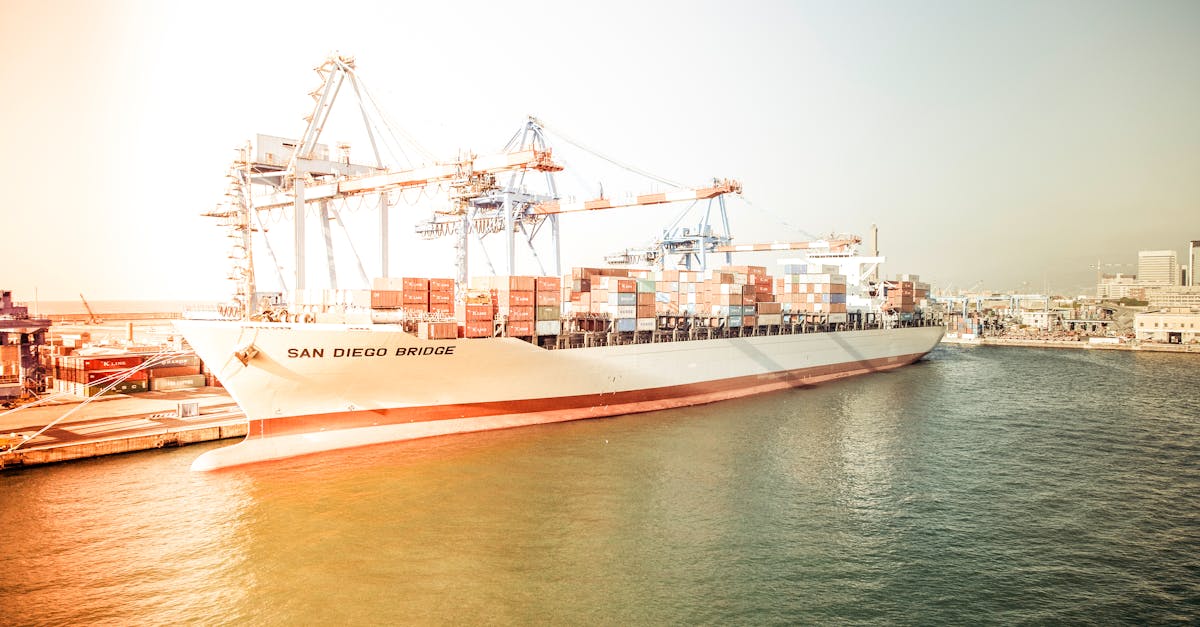
San Pedro, California – November 22, 2025. A hazardous fire aboard a large cargo vessel in the Port of Los Angeles has triggered a major emergency response, snarled one of America’s busiest trade gateways, and reignited questions about how prepared ports really are for complex maritime disasters. As multiple agencies battle the San Pedro cargo ship fire and hazmat teams work to contain potential toxic exposure, officials are warning that the incident could have ripple effects across shipping, the environment, and the regional economy.
City officials described the blaze as “highly volatile” due to dangerous cargo in several containers. Within hours, the Los Angeles Fire Department (LAFD) escalated the incident to a multi-alarm, major emergency status, with more than 150 firefighters and specialized hazardous materials units on scene, supported by U.S. Coast Guard assets and port authority crews.
“We are dealing with a moving, floating hazmat facility that’s on fire,” one incident commander said over local radio traffic, highlighting the stakes of the San Pedro cargo ship fire. The Los Angeles Times first broke the story, and by early afternoon, live streams from the harbor were drawing hundreds of thousands of viewers as plumes of dark smoke rose over the waterfront.
According to preliminary information from the Los Angeles Fire Department and Port of Los Angeles officials, the incident began in the early hours of November 22, 2025, when crew members aboard a Panama-flagged container vessel reported smoke emanating from a midship container stack while the ship was at berth in San Pedro.
The vessel, whose name officials have not immediately released pending notification of the operator and crew families, was reportedly carrying a mixed cargo load: consumer goods, auto parts, lithium-ion batteries, industrial chemicals, and refrigerated food containers. Initial radio traffic suggests that ship personnel attempted to use onboard fire suppression systems but quickly realized the fire was spreading too rapidly.
Port police and LAFD units were dispatched shortly after 3:30 a.m. local time. By the time first responders arrived at the pier, flames were visible from at least three stacked containers, with heavy black smoke signaling the likely involvement of synthetic materials and potentially hazardous chemicals. Harbor fireboats began attacking the blaze from the waterside while truck-based ladder companies and hazmat teams set up on shore.
Within roughly an hour, incident commanders declared a Major Emergency, triggering automatic mutual aid from neighboring agencies, including Long Beach Fire Department marine units and additional hazmat specialists. Nearby pier operations were shut down, and a temporary exclusion zone extending several hundred yards around the affected berth was imposed.
Officials say at least a portion of the cargo in the burning stack includes Class 9 miscellaneous dangerous goods and lithium-based batteries, both known to burn at extremely high temperatures and be difficult to extinguish. Lithium battery-related cargo fires have become an increasing concern for global maritime safety regulators, particularly in the wake of high-profile vehicle-carrier ship fires in recent years.
While there were early, unverified social media rumors of an explosion, authorities have so far described the incident as a rapidly spreading container fire rather than a single catastrophic blast. Some smaller “booming” sounds heard on videos shared online are believed to be containers rupturing or pressurized materials venting under intense heat.
As of late morning on November 22, officials reported multiple minor injuries among the ship’s crew and responding personnel—primarily smoke inhalation and heat-related issues—but no confirmed fatalities. A small number of workers on the adjacent piers were evaluated for respiratory irritation and then released. Out of caution, local authorities briefly advised harbor-adjacent neighborhoods to limit outdoor activity, particularly for vulnerable residents with respiratory conditions.
The San Pedro cargo ship fire is far more than a local incident; it’s a stress test for the safety, resilience, and transparency of one of the world’s critical maritime chokepoints: the twin ports of Los Angeles and Long Beach. Together, they handle roughly 30–35% of all containerized imports flowing into the United States. Any prolonged disruption at this hub can send shockwaves through retail, manufacturing, and automotive supply chains nationwide.
Even a single berthed vessel fire can have outsized effects. When a major container terminal shuts down—even partially—vessels waiting offshore can be forced to divert to other ports, idling billions of dollars in cargo. With peak holiday shipping still unwinding in late November, the timing is especially sensitive: warehouse inventories, just-in-time manufacturing schedules, and e-commerce fulfillment pipelines are already under strain.
Beyond logistics, the incident underscores a deeper structural issue: modern cargo ships are carrying more hazardous material than ever, in greater volumes, stacked higher and tighter. The line between “standard consumer goods” and “dangerous cargo” has blurred as everyday products—from electric vehicles to smartphones—depend on high-energy-density batteries and chemically complex components.
For Los Angeles and San Pedro communities, the incident also reignites long standing anxieties about industrial risk at the waterfront. Residents have long pressed for greater oversight of what passes through their backyard. A thick column of smoke over the harbor on a clear Saturday is a visceral reminder that the port is not just an economic engine, but a potential hazard zone.
Finally, in a climate where regulators globally are revisiting shipping emissions, safety standards, and decarbonization pathways, a high-profile major emergency in the Port of Los Angeles provides ammunition for both critics and reformers. Whether the narrative becomes “unavoidable accident in a complex system” or “preventable failure of oversight” will shape upcoming policy debates in Sacramento, Washington, and at the International Maritime Organization (IMO).
As images of the burning ship spread, social platforms lit up with live commentary, speculation, and anger. Drone clips, smartphone videos from the Vincent Thomas Bridge, and zoomed-in harbor shots began trending across X (formerly Twitter), TikTok, and Reddit within hours of the first local reports.
On X, the hashtag #SanPedroFire quickly climbed into the U.S. top 5 by mid-morning. A user claiming to be a dockworker wrote:
“Been at this port 18 yrs. This is the worst I’ve seen a container fire look this fast. We’ve had drills, but this feels different. Way more hazmat involved.” – @HarborHand310
Local residents expressed frustration at mixed messaging around air quality:
“Port officials say there’s ‘no immediate danger’ but the sky is BLACK and my kids’ school is still open. Someone make it make sense.” – @SPmomlife
On Reddit, a rapidly growing thread in r/LosAngeles featured both genuine updates and the usual armchair incident command. One highly upvoted comment from a self-identified former Navy firefighter tried to add perspective:
“Container fires are a nightmare scenario. You’re dealing with unknown inventories, mixed chemicals, and limited access. The fact they declared a major emergency this quickly tells me command is taking this seriously and not playing PR games.”
Others zeroed in on the cargo’s nature. Several users on r/Shipping and r/MaritimeIndustry posted screenshots from vessel-tracking sites and alleged manifests, speculating that large blocks of the load were lithium-ion batteries and electric vehicles.
On TikTok, short clips showing the column of smoke overlaid with text like “Is this safe??” and “LA’s supply chain on fire. Literally.” racked up millions of views. In parallel, conspiracy-adjacent hashtags began to attach themselves to the event, linking the fire to everything from cyberattacks on logistics systems to “silent warfare” against U.S. ports. None of these claims have been substantiated, but their speed highlights the mismatch between official communication cycles and the internet’s appetite for instant answers.
At the same time, some users tried to push back against panic. A marine engineer on X wrote:
“Before everyone turns this into an apocalypse scenario: yes, it’s serious. Yes, hazmat is involved. No, half of LA is not going to be evacuated. These ships and ports are designed with redundancies. Let the pros work.” – @PropulsionGeek
The overall tone: anxious, suspicious, and intensely curious. People want transparency about what’s burning, how long it will last, and what it means for their health—and their holiday deliveries.
Marine safety experts contacted by DailyTrendScope note that fires like the one in San Pedro are among the most challenging incidents port responders can face. Unlike structure fires on land, where rooms and access paths are relatively predictable, container ships are stacked with thousands of steel boxes, often with incomplete or inaccurate contents declarations.
Dr. Elaine Matsuda, a maritime risk researcher at Cal State Long Beach, explains:
“Think of a medium-sized container ship as a vertical maze. You might have hazardous materials nestled three or four rows deep and several levels up, with no easy way to reach them without moving other containers—which you obviously cannot do once they’re burning.”
Complicating matters further is the presence of lithium-ion batteries, either as loose cargo or inside electric vehicles. These batteries are susceptible to thermal runaway, a chemical chain reaction that can cause them to ignite repeatedly, even after appearing to be extinguished.
“If lithium-heavy cargo is involved, you’re essentially fighting a series of chemical reactions rather than a simple fuel-and-oxygen fire,” Matsuda says. “Traditional water or foam approaches help, but full suppression is harder, and re-ignition is a constant risk.”
Fire safety rules for carrying hazardous materials by sea are governed by international frameworks such as the International Maritime Dangerous Goods (IMDG) Code. But compliance is patchy, and misdeclared cargo remains a chronic problem.
Capt. Leo Fernández (Ret.), a former container ship master and now a safety consultant, points to a recurring pattern:
“Every major container fire over the last decade has exposed the same issue: shippers under-reporting or mislabeling dangerous goods to save on fees or avoid restrictions. Even with data digitization, enforcement lags. That means the manifest the fire chief sees in San Pedro might be an approximation at best.”
If that pattern holds, investigators probing the San Pedro fire will likely scrutinize the ship’s cargo declarations and the freight forwarders that consolidated loads on board. They’ll ask whether regulators and port operators had full visibility into the dangerous goods stored in the affected bay.
On the port side, Los Angeles has invested heavily in specialized training and equipment, particularly after the 2020–2022 supply chain crisis thrust the harbor into national headlines. But today’s incident will serve as a real-world audit of those preparations.
Maria Delgado, a port security and emergency management specialist, frames it this way:
“LA is one of the best-equipped ports in the country for this kind of event, with dedicated fireboats, hazmat teams, and integrated command with the Coast Guard. If this incident still escalates into a days-long fight, it raises the question: what happens at less-resourced ports facing similar risks?”
She adds that the path from a pier-side ship fire to a full-blown environmental and economic crisis can be surprisingly short:
“Ports were built for volume, not for perfect safety,” Delgado notes. “The San Pedro fire is going to be cited in planning documents for years, not only in LA but in ports from Houston to Rotterdam.”
Even before all the facts are known, markets are hypersensitive to any disruption at the Port of Los Angeles. Shipping analysts say carriers and freight forwarders are already recalculating short-term strategies.
Jason Kwan, a logistics analyst with Pacific Rim Trade Insight, predicts immediate but localized effects:
“If the fire is contained within 24 to 48 hours and limited to one berth, we’ll see delays and reshuffling of port calls but not a systemic meltdown. The problem is if safety inspectors decide they need broader checks on similar cargoes or vessels. That’s when you get cumulative delays that echo into December.”
He expects spot freight rates on key trans-Pacific routes to tick up if carriers build in extra buffer time or divert a handful of ships to Oakland, Seattle-Tacoma, or even Mexican ports.
On the equities side, transport and insurance firms could see short-term volatility. Insurers have been increasingly vocal about rising losses linked to large vessel fires; another headline incident will add pressure for higher premiums, stricter underwriting for hazmat-heavy shippers, and possibly new demands for on-vessel fire compartments or automated detection systems.
“The economics are straightforward,” Kwan says. “Big fires mean big claims. That cost ultimately gets priced into everything from an EV battery to a pair of imported sneakers.”
Over the next 24–72 hours, the San Pedro cargo ship fire will likely move through several phases: suppression, stabilization, investigation, and policy positioning.
The immediate priority for incident commanders is preventing horizontal and vertical spread. That means:
Depending on how deep the fire is seated within the stack, crews may face days of work “digging out” containers—carefully removing, opening, and dousing smoldering cargo. This is painstaking and dangerous work, often done under the constant threat of re-ignition.
Once the blaze is under control, a multi-agency investigation will begin in earnest. Likely participants include:
Key questions they will seek to answer:
Findings may take months, but the early public narrative will form much sooner, driven by preliminary statements and selective leaks.
In the political sphere, expect rapid calls for hearings and reforms. California legislators have already been pushing for tougher environmental and safety regulations in the ports, from emissions rules to labor protections. The San Pedro fire adds a potent visual to their arguments.
Potential outcomes over the coming months include:
Meanwhile, community groups in San Pedro and Wilmington are likely to leverage the incident to demand greater transparency around what passes through the harbor on any given day. We could see renewed pushes for public-facing hazardous cargo dashboards or at least more detailed emergency communication protocols when something goes wrong.
The hazardous cargo ship fire in San Pedro on November 22, 2025 is more than a dramatic skyline event; it’s a snapshot of the risks embedded in our globalized, electrified, just-in-time economy. One vessel, one berth, and one stack of containers can put lives at risk, strain emergency services, and send ripples through supply chains reaching deep into American living rooms and assembly lines.
In the coming days, the narrative will likely evolve. If firefighters manage to contain the blaze with limited injuries and minimal environmental damage, the incident will be held up as evidence that training and infrastructure investments at the Port of Los Angeles work. If, however, investigations reveal misdeclared cargo, preventable lapses, or long-term health or ecological impacts, San Pedro could become a case study in systemic failure—and a catalyst for sweeping regulatory change.
Either way, the images from today’s major emergency will linger: the towering plume over one of the world’s busiest ports; the fireboats’ arcs of water against a wall of steel; the uneasy questions from communities that live in the shadow of global trade. As ports grow bigger and cargo more complex, the question is no longer whether such incidents will occur, but how often—and how ready we are when they do.
For now, Los Angeles watches and waits as crews continue battling the San Pedro cargo ship inferno, a high-stakes reminder that the price of global commerce is not measured only in freight rates and delivery times, but in the risks shouldered at the water’s edge.