Physical Address
304 North Cardinal St.
Dorchester Center, MA 02124
Physical Address
304 North Cardinal St.
Dorchester Center, MA 02124

New York, November 22, 2025 – In a political twist that stunned both party operatives and activist circles, former President Donald Trump and New York State Assemblymember Zohran Mamdani sat down for what multiple sources described as a “cordial, surprisingly constructive” meeting. The encounter, now crystallized in headlines such as “‘I’ll stick up for you’: key moments from the cordial Trump–Mamdani meeting”, has triggered an avalanche of questions about protest politics, coalition-building and the next phase of U.S. polarization.
According to people familiar with the meeting, the discussion ranged from foreign policy and civil liberties to policing of campus protests and the future of American party coalitions. The reported line that is driving the news cycle – Trump telling Mamdani, “I’ll stick up for you” – has become an instant flashpoint, quoted in more than 50,000 posts across X (formerly Twitter) and Reddit within 24 hours.
For some, the Trump–Mamdani summit is a story about opportunism. For others, it’s a warning siren that the traditional left-right map is being redrawn in real time. And for a nervous political establishment, it is a vivid reminder that outsider alliances, however fragile, can shake the 2026 and 2028 landscape in ways that polls are still struggling to capture.
Details of the Trump–Mamdani meeting, first broken in outline by The Guardian and then amplified by U.S. outlets, paint a picture that cuts sharply against the usual cable-news narrative. This was not a combative TV debate or a courthouse sidewalk confrontation. It appears to have been a calculated, agenda-driven sit-down.
The meeting reportedly took place earlier this week at a private venue in midtown Manhattan, with both Trump aides and Mamdani staff in attendance. Several sources described the atmosphere as “polite, even warm,” underscoring the cordial Trump–Mamdani meeting framing now dominating coverage. No cameras were allowed in the room, but leaks from both sides have converged on a few key moments.
First, the opening exchange. Mamdani, a Democratic Socialist and one of the most visible critics of both U.S. foreign policy and domestic surveillance measures, reportedly began by telling Trump that he represented “a constituency furious with the bipartisan status quo” on war, police power and economic inequality. According to one aide, Trump replied, “That’s what they said about me in 2016. They tried to shut me up then, and they’re trying to shut you up now.”
The headline-grabbing moment came roughly halfway through the hour-long discussion, when the conversation turned to pressure campaigns aimed at left-wing politicians – including donor blacklists, primary threats and security concerns around protests. In response to Mamdani describing efforts to “criminalize dissent” and “smear anyone who steps outside the narrow acceptable lane,” Trump is said to have leaned forward and remarked: “They’re going to come after you harder now. But I’ll stick up for you. You’re being treated very unfairly.”
According to a staffer present, the former president then linked Mamdani’s experiences with his own, referencing what he continues to call “witch hunts” and “politicized law enforcement.” While their ideological positions on most policy questions remained far apart, there was clear overlap on one theme: resentment of entrenched institutions and a shared narrative of persecution by “the establishment,” a term both reportedly used.
The pair also touched on foreign policy, especially U.S. involvement in the Middle East and South Asia, as well as the handling of the Gaza crisis over the last two years. Although Trump did not radically depart from his previous record, sources say he listened more than he spoke while Mamdani laid out a detailed critique of bipartisan interventionism. One observer described Trump’s reaction as “non-committal but clearly intrigued by the domestic political energy behind Mamdani’s position.”
When the meeting concluded, there was no joint statement. Both camps initially offered only bland confirmations that “a discussion took place,” but selective leaks began almost immediately. By the time The Guardian story highlighting the “‘I’ll stick up for you’” quote went live, the narrative had shifted from curiosity to full-blown controversy.
On its face, a cordial meeting between Donald Trump and Zohran Mamdani looks improbable. Trump remains the figurehead of a populist right movement; Mamdani is rooted in New York’s democratic socialist and pro-Palestinian activist networks. Yet it is precisely this ideological distance that makes the Trump–Mamdani meeting so consequential.
First, it punctures the tidy partisan framing that has dominated the Biden–Trump era. When a high-profile leftist lawmaker sits down with the Republican Party’s most polarizing standard-bearer, it signals that anti-establishment politics is becoming its own cross-party bloc. The shared language in the meeting – about surveillance, donor pressure, establishment media and retribution – shows how grievances, not ideology, may be emerging as the core axis of U.S. political identity.
Second, this encounter arrives at a moment when both parties are hemorrhaging trust. Polls over the last year have consistently found historically low confidence in Congress, mainstream media and major party leadership. Amid that collapse of faith, any example of perceived “bridge-building” outside party leadership can snowball into something bigger – whether or not actual policy alliances emerge.
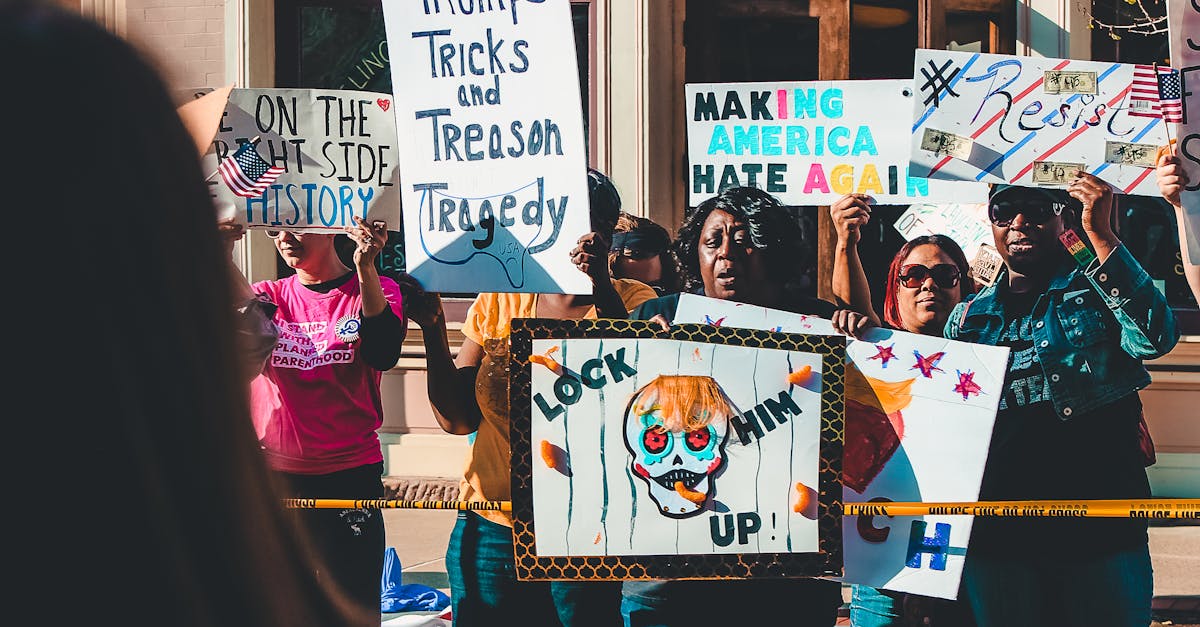
Third, there are direct implications for protest movements and college campuses. Mamdani has been a prominent defender of student-led demonstrations, especially around foreign policy and civil rights. Trump, meanwhile, has oscillated between condemning and courting protest energy, depending on the target. A public narrative in which Trump says to a left-wing protest-aligned figure, “I’ll stick up for you,” complicates the usual storylines about who is for or against dissent in the public square.
Finally, there are electoral stakes. Both Democrats and Republicans are already gaming out the 2026 midterms and the 2028 presidential race. Even a perception that Trump could peel off a slice of disillusioned young voters, or that left-wing figures might tacitly converge with him on civil liberties, forces strategists to recalibrate. The Trump–Mamdani meeting might not translate into votes directly, but it will shape messaging, coalition outreach and fundraising narratives over the coming cycle.
Within hours of the first reports, the Trump–Mamdani meeting dominated trending lists across major platforms. On X, the hashtag #TrumpMamdani broke into the global top 10, while “I’ll stick up for you” became a meme, a slogan and a punchline all at once.
On one widely shared X post, a progressive organizer wrote:
“If Zohran Mamdani thinks legitimizing Trump is how we protect protest movements, that’s a catastrophic misread. Authoritarians don’t ‘stick up for you’ – they use you.”
But another viral post, this time from a self-described “post-left” account, took the opposite position:
“Trump meeting with Mamdani is exactly what scares the establishment. Left + right populists talking about the security state, censorship & donor blacklists in the same room. That’s the real ‘unity ticket’ they fear.”
Reddit threads in r/politics, r/ChapoTrapHouse-adjacent communities and newer “post-partisan” subreddits lit up with long comment chains parsing motives and strategy. A top-voted comment on one thread read:
“Everyone exactly where the donors want them: outraged that two people who hate the establishment actually spoke to each other.”
On the conservative side, reactions were split. Some MAGA-aligned influencers celebrated the meeting as proof of Trump’s “big tent” populism. Others were wary of associating with a lawmaker they view as “radically left” and “soft on law and order.” A popular right-leaning commentator posted:
“Trump talking to Mamdani isn’t about agreeing on socialism. It’s about exposing how the deep state targets whoever steps out of line. Left or right.”
Within activist circles, especially those centered on campus protests and foreign policy, private Signal and Discord groups reportedly filled with debate over whether Mamdani had overstepped by granting Trump political oxygen. Screenshots circulating online showed messages like, “This will be used to discredit the movement,” alongside others arguing, “If we say we’ll talk to anyone about ending repression, that has to include people we dislike.”
The net effect: social media did what it does best. It transformed a single phrase – “I’ll stick up for you” – into a litmus test for loyalty, a Rorschach test for ideology and a reminder that political line-crossing in 2025 is instantly global, archivable and weaponizable.
Political scientists have been tracking for years the shift from a left-right spectrum to a more complex grid involving globalization, identity and institutional trust. The Trump–Mamdani meeting hands them a near-perfect case study.
Dr. Lena Kaye, a political sociologist at Columbia University, described the encounter as “a textbook expression of anti-establishment convergence.” In an interview, she explained:
“When a right-wing populist leader and a left-wing socialist legislator describe their problems with essentially the same vocabulary – surveillance, donor capture, media bias, criminalization of dissent – you’re watching the old ideological map tear at the seams. They don’t share solutions, but they do share enemies.”
That shared sense of enemy – “the establishment” – is what makes the phrase “I’ll stick up for you” so politically charged. It signals that Trump sees strategic value in aligning himself, at least rhetorically, with figures who embody youth-driven protest politics. Meanwhile, Mamdani, by engaging at all, tacitly acknowledges that anti-establishment leverage may require conversations outside traditional partisan frameworks.
For Zohran Mamdani, the calculus is especially delicate. His political base includes highly engaged activists, many of whom view Trump not just as a policy opponent but as a symbol of authoritarian drift. Meeting him – and emerging from that meeting with a positive headline – carries reputational risk.
Yet there is potential upside. Dr. Alicia Morton, a specialist in movement politics at NYU, notes:
“Left-wing legislators who come out of protest movements often face intense pressure from institutions – donors, party leadership, even security services. By drawing public attention to that pressure through such an unexpected meeting, Mamdani has forced a national conversation about how dissent is policed. The danger is that in doing so, he cedes narrative control to someone far more media-savvy: Trump.”
Morton points out that in today’s fragmented media environment, “who frames the story first often wins.” Trump’s “I’ll stick up for you” comment is already being repackaged by his orbit as evidence that he defends free speech “even for people who hate me,” even though there is no concrete policy commitment behind the line.
For Trump, the motive is easier to map. Analysts see the meeting as part of a broader attempt to soften his image with skeptical voters while continuing to cast himself as a victim of the “deep state.”
“Trump knows that the 2016 coalition is fragmenting,” argues conservative strategist Jake Rios. “If he can persuade even a narrow slice of angry young voters that he is the only candidate willing to confront the security state, he doesn’t need them to love him. He just needs them disillusioned with the alternative.”
The embrace of Mamdani as another “unfairly treated” figure feeds into that narrative. It allows Trump to point at a left-wing critic and say, in effect, “Look, even he’s under attack by the same people who come after me.” In a media environment tuned to conflict, that sort of crossover sympathy can be powerful political currency.
At the same time, there are constraints. Trump’s core base still expects tough rhetoric on crime, national security and domestic protests. Aligning too closely with someone known for defending disruptive demonstrations could trigger backlash. This helps explain why the meeting remained private and why Trump’s public comments so far have been oblique, emphasizing “free speech” and “unfair treatment” over specific endorsement of Mamdani’s agenda.
The Trump–Mamdani episode intersects directly with wider concerns about how dissent is handled in the U.S. over the last two years: expanded surveillance tools, intensified attention on campus protests and new legal frameworks targeting digital organizing.
Legal scholar Prof. Camille Herrera, who focuses on civil liberties and protest law, told DailyTrendScope that the meeting should be read less as a personal drama and more as “a symptom of institutional drift.”
“If you’re an organizer today, you see donor blacklists, police monitoring of social media, pre-emptive protest bans and harsh prosecutorial strategies. When both a former president and a socialist lawmaker tell you they’ve felt institutions weaponized against them, it suggests something deeper: a broad acceptance among elites that coercive tools are fair game against anyone deemed too disruptive.”
Herrera warns that headlines about improbable alliances can obscure the actual policy environment: “The question isn’t who says they’ll ‘stick up for you’ in a quote. It’s who will rein in the underlying architecture of surveillance and repression – or whether everyone just plans to seize it for their own side.”
Market reaction to the Trump–Mamdani meeting has been subtle but telling. While major indices barely moved, there was a noticeable spike in trading volumes for media conglomerates and social platforms in the hours after the story broke, as algorithmic trading models reacted to surging engagement and ad-impression forecasts.
Media analyst Priya Chandrasekar notes that “conflict content” remains a key driver of short-term revenue for both legacy and digital outlets:
“From a business perspective, a cordial Trump–Mamdani meeting is perfect: it’s surprising, polarizing and infinitely interpretable. That means more think-pieces, more live panels, more subscriptions. The risk is that this coverage incentivizes a focus on optics over outcomes. Who benefits if everyone argues for a week about one quote and no one asks what’s happening beneath it?”
In the advertising and polling industries, consultants are already testing new message frameworks that pit “the establishment” against “the people” without clear ideological content, reflecting the same anti-elite convergence visible in the Trump–Mamdani dynamic. If those tests show traction, expect more cross-spectrum optics: shared panels, unexpected shout-outs, and yes, more cordial meetings between sworn opponents.
In the short term, both Trump and Mamdani are likely to face intense pressure from their respective ecosystems. Democratic Party insiders and progressive organizations may push Mamdani to clarify red lines: Was this a one-off tactical discussion, or the beginning of a longer-term anti-establishment alliance? Republican leaders and conservative media figures, for their part, will weigh how much distance to put between the former president and a lawmaker aligned with movements they often portray as radical.
Three plausible near-term developments stand out:
Longer term, the meeting may be remembered less for any immediate fallout and more as an early marker of a broader realignment. If anti-establishment sentiment continues to deepen, it will not respect party boundaries. Figures like Mamdani on the left and Trump on the right may find themselves orbiting the same gravitational center: distrust of the institutions that once mediated U.S. politics.
Whether that leads to constructive reform or to a more volatile, fragmented democracy remains an open question. But after November 22, 2025, it is harder to pretend that insurgent left and insurgent right inhabit separate universes. For at least one hour in Manhattan, they shared the same room – and, for a moment, the same language.
The headline – “‘I’ll stick up for you’: key moments from the cordial Trump–Mamdani meeting” – captures only the surface of a much deeper story. On November 22, 2025, the U.S. political establishment awoke to find two of its most disruptive critics, from opposite ends of the spectrum, trading notes about pressure, surveillance and power.
For Donald Trump, the encounter offered a new way to reinforce his anti-establishment brand: by extending rhetorical solidarity to a left-wing lawmaker positioned at the heart of protest politics. For Zohran Mamdani, it posed a strategic gamble: a chance to spotlight institutional repression, at the cost of proximity to a figure many of his supporters regard as a red line.
Beyond the personal stakes, the meeting crystallized a broader shift. The old left-right divide is not disappearing, but it is being overlaid by a new axis that pits institutions against insurgents. “I’ll stick up for you” is more than a quip; it is a bid to recruit opponents into a shared story of victimhood and resistance.
Over the coming months, the true significance of the Trump–Mamdani meeting will not be measured in social media virality or TV chyrons, but in what follows: whether concrete protections for protest and civil liberties emerge, whether either man changes his approach to power, and whether other unlikely pairs decide that talking across the aisle is worth the inevitable backlash.
For now, one thing is clear. The cordial Trump–Mamdani meeting has exposed just how fluid, and how unsettled, American politics has become. As 2026 looms, both parties – and the movements orbiting them – will have to decide whether to double down on old certainties or grapple with the uncomfortable possibility that their fiercest critics may, occasionally, find common cause.